


Tack welding is a fundamental skill every welder should possess, but it's often overlooked. Tack welds are what keep your parts in place and your alignment on point before the final weld ever touches the joint. From fabricating pipes to building complex assemblies, getting your tack welds right sets the tone for everything that follows.
Below, we'll cover what tack welding is, how to do it across different materials, and what it takes to do it well.
What is a Tack Weld?
A tack weld is a short, temporary weld used to hold two pieces of metal in position before the final weld is applied. It keeps your metal parts aligned and stable throughout the welding process without committing to the full weld joint.
Tack welds are small welds, typically ranging from 1/4 to 3/4 of an inch, placed at intervals along the weld joint. They prevent unwanted movement and maintain the correct joint gap as you apply heat during the final welding process. Without them, metal parts shift, gaps widen, and the finished weld suffers.
Despite being temporary welds, tack welds still interact with the base metal. They create a heat-affected zone, influence how the weld metal behaves, and can affect the quality of the final weld if they're not placed correctly. This is why tack welding is a skill in its own right.
Types of Tack Welding
There are several types of tack welding. The type you use depends on the materials, the joint configuration, and the requirements of the final welding procedure.
Standard Tack Weld
These are small welds placed at regular intervals along the joint length to hold metal pieces in position. Standard tack welds are straightforward, reliable, and used across most metal fabrication applications.
Bridge Tack Weld
Welders use bridge tack welds to span an uneven or wider joint gap, bridging the space between two pieces of metal that don't sit flush. Bridge tacks are especially useful when working with metal parts that have slight misalignment, helping keep everything stable until the final weld closes the gap properly.
Hot Tack Weld
A hot tack weld uses a higher heat input to fuse metal surfaces quickly, typically in situations where speed matters or the base metal requires a stronger temporary hold. Hot tack welds are common in high-heat applications but require careful heat management to avoid weld cracks or distortion in the heat-affected zone.

[Image by Mandiri Abadi from Pexels on Canva]
How to Tack Weld Different Metals
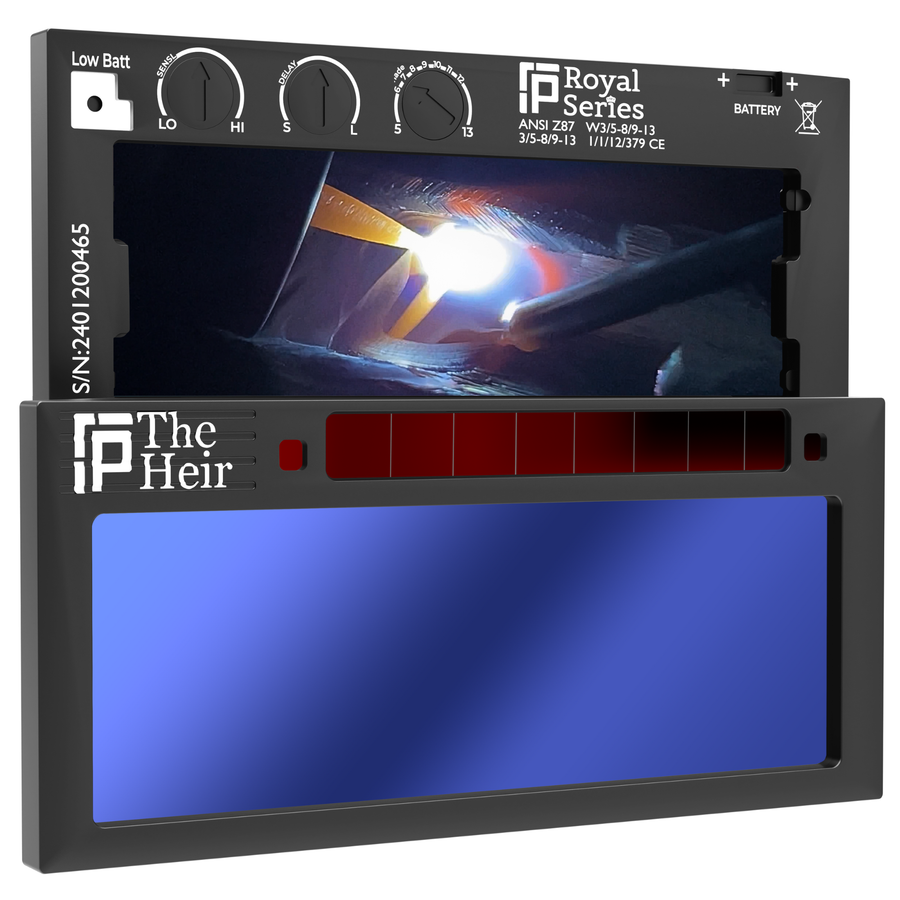
The process varies depending on the base metal you're working with. Before you start, ensure you have the right equipment, including a properly rated welding hood and welding lens for the job. You can also use clear welding lenses to protect your primary lens from hot weld spatter, flying debris, and scratches.
Here's how to approach tack welding across the three most common materials.
How to Tack Weld Steel
Steel is the most forgiving material for tack welding, but that doesn't mean precision goes out the window.
- Start by cleaning your metal surfaces thoroughly.
- Securely clamp your metal parts to maintain a consistent joint gap before placing any tack welds.
- Using a MIG welder, apply short welds at equal intervals along the joint length.
- Ensure heat is distributed evenly across the weld joint. This minimizes transverse shrinkage and keeps the metal pieces from pulling out of alignment.
- For longer seams, work from the center outward rather than tacking in one direction. This manages heat generated across the joint more effectively and reduces distortion in the finished weld.
How to Tack Weld Stainless Steel
Stainless steel is weld-crack-sensitive and reacts strongly to localized heating, making heat management critical.
- Use a lower heat input than you would with standard steel, and avoid arc strikes outside the weld joint. These create weak points that can compromise the final weld
- Use rapid quenching between tack welds to control the heat-affected zone and prevent warping
- Choose a filler material that's compatible with your stainless grade
- If you're working with thin materials or weld-crack-sensitive materials, like cast iron, reduce your heat input further to avoid burn-through
How to Tack Weld Aluminum
Aluminum presents its own challenges. It has a low melting point, conducts heat rapidly, and often has an aluminum powder oxide layer on the surface that must be cleaned off before welding. If this layer isn't removed, it contaminates the weld metal and weakens the joint.
- Use a filler wire suited to your aluminum grade
- Keep your tack welds short to avoid excess filler metal buildup.
- Space your tack welds correctly along the joint length
- Avoid using too much heat

[Image by Jafar Gidado from Pexels on Canva]
Forms of Tack Welding and When to Use Them
Square Pattern
A square pattern is used when joining two flat metal pieces face-to-face. Tack welds are placed in a square pattern at the corners and along the edges to keep the metal surfaces rigidly aligned and prevent shifting during the final welding process. This form of tack welding is common in sheet metal fabrication and wire mesh assemblies.
Vertical
When metal parts need to align vertically, such as in structural assemblies or when fabricating pipes, tack welds are placed along the weld joint's vertical axis. Proper spacing along the joint length is critical here, as heat generated during welding can cause the pieces to pull in or out of vertical alignment if tacks are too far apart.
Right Angle
A right angle is used to hold two pieces of metal at a 90-degree angle to each other. In this form of tack welding, tack welds are applied on both sides of the joint to resist considerable stresses and keep the angle consistent before the final weld locks it in place. It's often used in frame and bracket fabrication.
Right Angle Corner
The right-angle corner is similar to the right-angle form, but is applied specifically at corner joints where two metal pieces meet at an edge. This form requires precise tack placement to maintain the joint gap and prevent the corner from closing or opening under heat. It's a common form in box fabrication and pressure vessel construction.
How Tack Welding Compares to Other Welding Methods
Tack Welding
A temporary welding process used to hold metal parts in position before the final weld is applied. Tack welds are small, short welds placed at intervals along the weld joint to maintain alignment and prevent movement during the final welding procedure.
Spot Welding
Welders use spot welding as a permanent joining method that uses electrical resistance to generate heat at a localized point between two metal surfaces, fusing them without filler metal. It produces dot-like welds and is widely used in high-volume sheet-metal and galvanized-steel production.
Stud Welding
You can use stud welding to permanently attach a metal stud or fastener directly to a base metal surface using heat generated by an electric arc. It's fast, precise, and commonly used in structural steel, construction, and manufacturing services where threaded fasteners need to be secured without drilling.
Orbital Welding
Orbital welding is an automated welding process where the arc rotates mechanically around a fixed weld joint. It delivers consistent, high-quality welds with minimal operator input.
Fusion Welding
This is a welding process that joins two pieces of metal by melting the base metal together, with or without filler material. It covers a broad range of welding methods and is particularly effective for thin metal materials and applications where introducing excess filler metal would affect the integrity of the finished weld.
| Welding Method | Purpose | Permanent or Temporary | Filler Metal Required | Best For |
| Tack Welding | Holds metal parts in position before the final weld | Temporary | Sometimes | Alignment and preparation across all metal fabrication |
| Spot Welding | Joins metal surfaces at localized points using electrical resistance | Permanent | No | High-volume sheet metal and galvanized steel production |
| Stud Welding | Attaches a metal stud or fastener to a base metal surface | Permanent | No | Structural steel, construction, and manufacturing services |
| Orbital Welding | Automated welding that rotates around a fixed weld joint | Permanent | Sometimes | Fabricating pipes, pressure vessels, and high-precision tubing |
| Fusion Welding | Joins two pieces of metal by melting the base metal together | Permanent | Sometimes | Thin metal materials and applications where filler metal isn't ideal |
Techniques to Ensure High-Quality Tack Welds
- Clean metal surfaces before you start. Oil, rust, and mill scale all compromise weld quality.
- Maintain a consistent joint gap and use clamps or fixtures to hold metal parts in place.
- Space tack welds at equal intervals along the joint length to prevent localized heating and transverse shrinkage.
- Match heat input to material thickness. This is especially important when you're working on thin metal materials.
- Keep arc strikes within the weld joint to avoid weak points that can develop into weld cracks.
- Inspect each tack weld before proceeding, and correct any defects early.

[Image by David Stanciu on Canva]
Frequently Asked Questions
Can Tack Welds Be Used as Permanent Welds?
Tack welds are temporary and not designed to serve as permanent joints. They lack the mechanical strength and penetration of a finished weld and are not suitable for applications requiring welds to resist significant stresses.
What Is the Difference Between a Bridge Tack Weld and a Standard Tack Weld?
A standard tack weld holds metal pieces that sit flush against each other. A bridge tack weld spans a wider or uneven joint gap, bridging the space between two pieces of metal that don't align perfectly before the final welding procedure begins.
How Many Tack Welds Do I Need per Joint?
It depends on the joint length and material thickness. As a general rule, tack welds should be spaced closely enough to prevent movement and transverse shrinkage but not so close that heat generated accumulates and damages the base metal or heat-affected zone.
Are Tack Welds Necessary for Every Welding Process?
Not always, but skipping them on anything beyond very short welds significantly increases the risk of misalignment, distortion, and defective welds. When fabricating pipes, pressure vessels, and structural assemblies, tack welds are a standard part of the welding procedure.
Conclusion
You may see tack welding as a preparatory step, but it's so much more than that. It's an important part of the welding process that directly affects the quality of the finished weld. When you do them right, tack welds give you the control you need to produce clean, accurate, consistent, high-quality results every time. However, when done wrong, they create problems that no amount of skill in the final welding procedure can fully fix.