


Stud welding is a fast, reliable, and versatile fastening method used across a wide range of industries. It is a process that construction, manufacturing, and fabrication professionals depend on daily to produce strong, precise, and permanent joins efficiently.
This guide covers everything you need to know about stud welding. From the basic principles of the process, to the different types of stud welding, the materials it works with, and the industries that rely on it, this is a straightforward reference for anyone looking to build their understanding of stud welding from the ground up.
What Is Stud Welding?
Stud welding is a welding process that permanently attaches a metal stud, fastener, or similar component to a base metal workpiece in a single operation. The stud is joined end-on to the surface of the base metal, creating a full cross-section weld that is typically stronger than the stud itself.
The process uses heat generated by an electrical arc to melt the base of the stud and the surface of the workpiece simultaneously. The two molten surfaces are then pressed together and allowed to solidify, forming a permanent, high-strength bond. The entire process takes a fraction of a second, making it one of the fastest fastening methods available.
Unlike traditional fastening methods such as bolting or riveting, stud welding requires access to only one side of the workpiece. This makes it particularly valuable in applications where the reverse side of the material is inaccessible or where a clean, unaffected finish on the opposite surface is required.
How Does Stud Welding Work?
Stud welding follows a precise sequence of steps that takes place in a fraction of a second. The complete cycle takes between 0.01 and 1 second, depending on the process and stud size.
-
Position the Stud
The stud is loaded into the welding gun and positioned against the base metal surface at the exact point where the weld is required. Correct positioning at this stage is critical to achieving a straight, accurate weld.
-
Initiate the Arc
When the trigger is pulled, the stud gun lifts the stud slightly away from the base metal surface. An electrical arc is initiated between the stud tip and the workpiece, generating intense heat that melts both surfaces simultaneously.
-
Melt the Surfaces
The arc is maintained for a precisely controlled period, allowing the stud base and the workpiece surface to reach the temperature required for proper fusion. The duration of this stage depends on the stud welding process used and the stud size.
-
Drive the Stud
Once the correct temperature is reached, the welding gun drives the stud into the molten pool on the workpiece surface. The two molten surfaces combine and begin to solidify immediately.
-
Form the Weld
As the material cools, a full cross-section weld is formed across the entire base of the stud. The result is a permanent, high-strength joint that is firmly bonded to the workpiece surface.

[Image by Thaweesak Thipphamon from Getty Images on Canva]
Types of Stud Welding
There are three primary types of stud welding, each suited to different applications, materials, and stud sizes. Understanding the differences between them is key to selecting the right process for the job.
Drawn Arc Stud Welding
Drawn arc stud welding is the most widely used stud welding method. It is designed for larger diameter studs and thicker base materials, making it the standard choice in heavy-duty applications such as construction and structural fabrication.
The process uses a ceramic ferrule placed around the base of the stud to contain the molten metal during welding and shape the finished weld. Drawn arc stud welding produces a full cross-section weld with high strength and can join studs ranging from 3mm to 25mm in diameter.
Capacitor Discharge Stud Welding
Capacitor-discharge stud welding uses the rapid discharge of stored electrical energy to generate the heat required for welding. The process is extremely fast, completing in as little as 0.01 seconds, and produces minimal heat input to the base material. This makes it well-suited to thinner materials where heat distortion is a concern, as well as applications requiring a clean finish on the reverse side of the workpiece. CD stud welding is commonly used in the automotive, electronics, and sheet metal industries.
Short Cycle Stud Welding
Short-cycle stud welding is a variation of the drawn arc process that uses a shorter arc duration and higher current levels. It is designed for applications that require faster cycle times than standard drawn arc welding, but involve thicker materials than capacitor discharge welding is suited to. Short-cycle stud welding does not require a ceramic ferrule, making it a more flexible option in production environments where setup time and tooling costs need to be minimized.
Stud Welding Equipment
Stud Welding Gun
The welding gun is the primary tool for positioning the stud, initiating the arc, and driving the stud into the molten weld pool. It controls the lift height, plunge speed, and timing of the weld cycle.
Power Source
The power source supplies the electrical current required to generate the welding arc. Drawn arc stud welding requires a dedicated stud welding power unit capable of delivering high current levels consistently. Capacitor discharge stud welding uses a power source that stores and rapidly discharges electrical energy. To achieve reliable weld quality, it's important to select the correct power source for the process and stud size.
Studs and Fasteners
Studs are available in a wide range of materials, diameters, lengths, and head configurations. When selecting a stud, consider the base material, the joint's load requirements, and the welding process you're using.
Ceramic Ferrules
Ceramic ferrules are used in drawn arc stud welding to contain the molten metal during the weld cycle and shape the finished weld profile. They also protect the surrounding area from spatter.
Collets and Accessories
Collets are the components within the stud welding gun that hold the stud in position during the weld cycle. They are available in sizes that correspond to the stud diameter and must be matched correctly to ensure consistent positioning and contact. Additional accessories, such as foot pieces and extensions, are available to accommodate different working positions and access requirements.
Protective Equipment
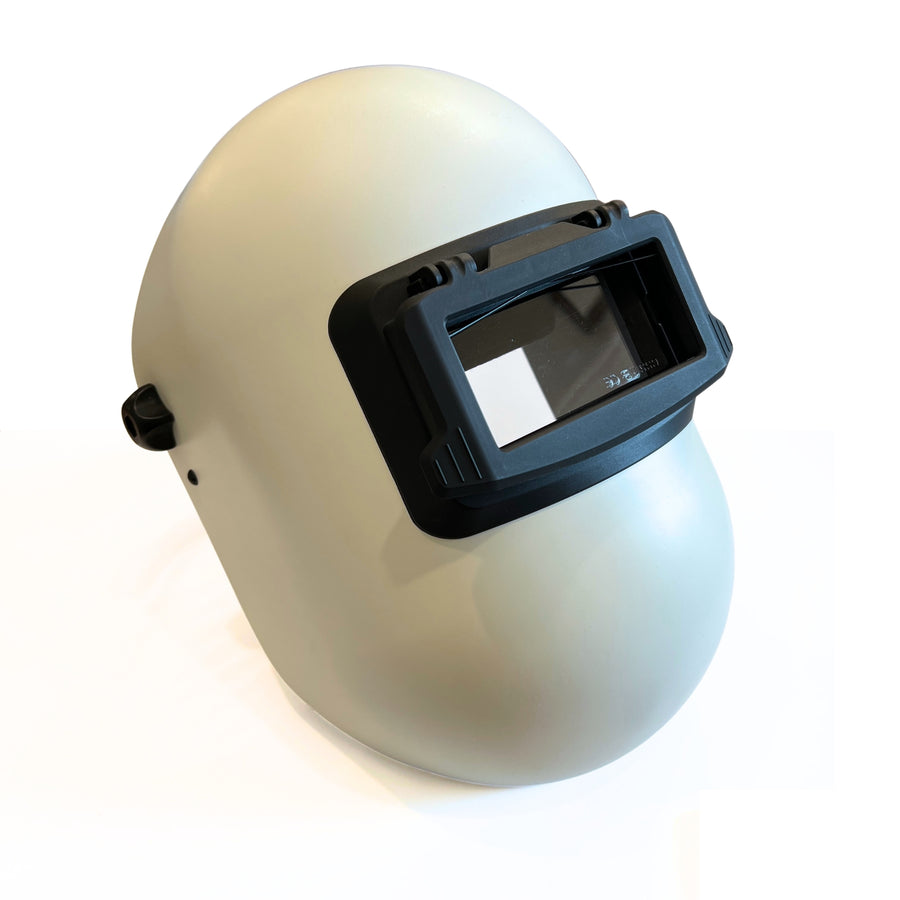
Stud welding produces intense light, heat, and spatter during the weld cycle. A quality welding helmet, such as a flip-up pipeliner welding hood, and appropriate welding lenses rated for the process are essential equipment for anyone operating a stud welding gun. You can use this welding lens color chart to find the perfect tint for your work.

[Image by Thaweesak Thipphamon from Getty Images on Canva]
Which Materials Can Be Stud Welded?
Stud welding is compatible with a range of metals, but the process's suitability depends on the material's conductivity, thickness, and surface condition. Here are some materials that you can stud weld:
Mild Steel
Mild steel is the most commonly stud-welded material. It is well-suited to all three stud welding processes and reliably produces strong, consistent welds. This welding steel is the standard choice across construction, structural fabrication, and general manufacturing applications.
Stainless Steel
Stainless steel can be stud-welded effectively using both drawn arc and capacitor discharge processes. Parameter adjustments are typically required to account for its higher electrical resistance.
Aluminum
Aluminum is compatible with stud welding but presents additional challenges due to its high thermal conductivity and the oxide layer that forms on its surface. Capacitor-discharge stud welding is generally preferred for aluminum, as its rapid cycle time minimizes heat input and reduces the risk of distortion.
Copper and Copper Alloys
Copper and certain copper alloys can be stud welded under specific conditions, though the high thermal conductivity of copper makes achieving consistent results more difficult. Welders usually use specialist equipment and precise parameter control when dealing with this material.
Galvanized and Coated Steels
Galvanized and coated steels can be stud welded, but you must take surface coatings into account. Coatings can affect arc stability and weld quality and may require parameter adjustments or surface preparation before welding. Electrode and equipment maintenance also becomes more frequent when working with coated materials.
Benefits of Stud Welding
Speed: Each weld cycle completes in a fraction of a second with no drilling, tapping, or additional preparation required, making it one of the fastest fastening methods available.
Single-Sided Access: Stud welding requires access to only one side of the workpiece, keeping the opposite surface clean and undamaged.
High Strength: A correctly executed stud weld produces a full cross-section bond that is typically stronger than the stud itself.
No Pre-Drilling Required: No pre-drilling is needed, eliminating a production step and maintaining the structural integrity of the base material.
Minimal Distortion: Heat is applied to a concentrated area for an extremely short period, reducing the risk of warping or distortion in the surrounding material.
Versatility: Compatible with a wide range of stud types, sizes, and base materials, and can be performed manually or integrated into automated production lines.
Applications of Stud Welding
Construction and Structural Steel: Shear connectors are stud-welded to steel beams to create composite structures in bridges, commercial buildings, and infrastructure projects.
Automotive Manufacturing: Studs are welded to body panels, chassis components, and interior structures for attaching trim, wiring, and mechanical components.
Shipbuilding: Stud welding is used extensively for attaching insulation, pipework supports, and structural components throughout vessel construction.
Aerospace: It's used in the fabrication and assembly of aircraft components where precise, lightweight, and reliable fastening is required.
Electronics and Electrical Equipment: Small-diameter studs are welded to enclosures, panels, and components for grounding, mounting, and assembly purposes.
Architectural Metalwork: It's used in the production of facades, cladding systems, and decorative metalwork, where a clean reverse-surface finish is essential.
Power Generation: Stud welding is used in the construction and maintenance of power plant equipment, boilers, and pressure vessels.

[Image by Thaweesak Thipphamon from Getty Images on Canva]
Frequently Asked Questions
How Long Does a Stud Weld Take?
The weld cycle takes between 0.01 and 1 second, depending on the process and stud size. When factoring in positioning and setup, stud welding remains one of the fastest fastening methods available.
How Does Stud Welding Compare to Bolting and Riveting?
Stud welding produces a stronger, more permanent bond with no pre-drilled holes and no access required to the reverse side of the workpiece. For high-volume production environments where strength, speed, and surface finish are priorities, stud welding is the more efficient and reliable option.
What Thickness of Base Material Is Required for Stud Welding?
As a general guideline, the base material should be at least one-third of the stud diameter in thickness. Capacitor-discharge stud welding is suited to thinner materials, while drawn-arc stud welding requires a thicker base material to absorb the higher heat input.
Conclusion
Stud welding is one of the most efficient and reliable fastening methods available, and understanding it properly puts you in a stronger position to apply it effectively. Knowing the right process, equipment, and parameters for your application is what separates consistent, high-quality results from costly mistakes.
Choose the stud welding process that best fits your material, production requirements, and end goal. Whether you are working on a single fabrication project or a high-volume production line, stud welding delivers the speed, strength, and precision that the job demands.