


You've probably heard the term orbital welding, or maybe even seen orbital welding equipment in use on a job site. A weld head clamps onto a pipe, the arc starts rotating, and a few minutes later, you're looking at a result that delivers high-quality, repeatable welds more consistently than most certified welders can produce by hand, run after run.
That's what orbital welding does. It's an automated welding process built specifically for pipe work, and its whole purpose is to take human error out of the equation. Orbital welding offers consistency that hand welding simply cannot match at production volumes.
This guide breaks down what orbital welding is, how the process works, and everything else you need to know.
Orbital Welding Is Automated TIG
In orbital welding, the welding arc rotates 360 degrees mechanically around a fixed tube or pipe using a non-consumable tungsten electrode. The workpiece never moves. The welding tool does.
In manual welding, you move the welding torch around the pipe, stop, reposition, and repeat. Orbital welding replaces that hand movement with a computer-controlled weld head that carries the electrode around the pipe at a consistent arc length and welding current. The result is a weld you can repeat the same way every time using the saved settings. That consistent weld quality is the main benefit of orbital.
Where the Name Comes From
The electrode "orbits" the pipe, which is where the name comes from. The orbital welding process was developed in the 1960s by aerospace engineers to address leaks in fuel and hydraulic lines on the X-15 rocket plane. Manual welding couldn't deliver the reliability those systems needed, and automatic orbital welding was the answer. That automatic orbital welding process became the standard in aerospace and eventually spread to other industries.
Orbital Welding Is a Form of Tungsten Inert Gas Welding
Orbital TIG welding falls under the gas tungsten arc welding (GTAW) family. It uses a non-consumable tungsten electrode and tungsten inert gas shielding, which produces the same clean, precise weld pool that TIG welders already know. The difference is in mechanical control rather than human hand movement.
Filler wire is optional. For thin-walled tubing, an autogenous fusion pass without filler material often works perfectly. However, for thicker walls, a wire feed system adds material across multiple passes to build a robust joint. To compare how these joint dynamics shift when working by hand versus with automation, this guide on the types of welds, explained with their pros and cons, covers the core differences in detail.
The wire feeder is controlled by the power supply, along with the other welding parameters. Whether you use a wire feed mechanism depends on the tube diameters and wall thickness of your application.
How the Orbital Welding Process Actually Works, Step by Step
If you already run TIG welding, most of this will feel familiar. The orbital welding process follows the same fundamentals. What's different is that the welding parameters are computer-controlled instead of operator-guided.
The Core Components of a Typical Orbital Welding System
A standard setup includes four main parts:
- Power Supply/Controller: The power supply stores weld programs, controls welding current, manages welding speed, and handles purge timing. It logs every weld cycle automatically for quality records.
-
Orbital welding heads: The weld head clamps onto the tube or pipe and carries the tungsten electrode around the joint. Two main types of orbital welding heads are used in practice:
- Enclosed Weld Head: A sealed chamber filled with inert gas surrounds the entire weld pool. Used for high-purity applications in pharmaceutical and semiconductor work. Because these heads are entirely opaque, you rely on external monitor screens to watch the arc. Choosing the right optics for supervising automated systems can be tricky. Read the best welding lens guide to understand how viewfinders and digital screen clarity affect your setup.
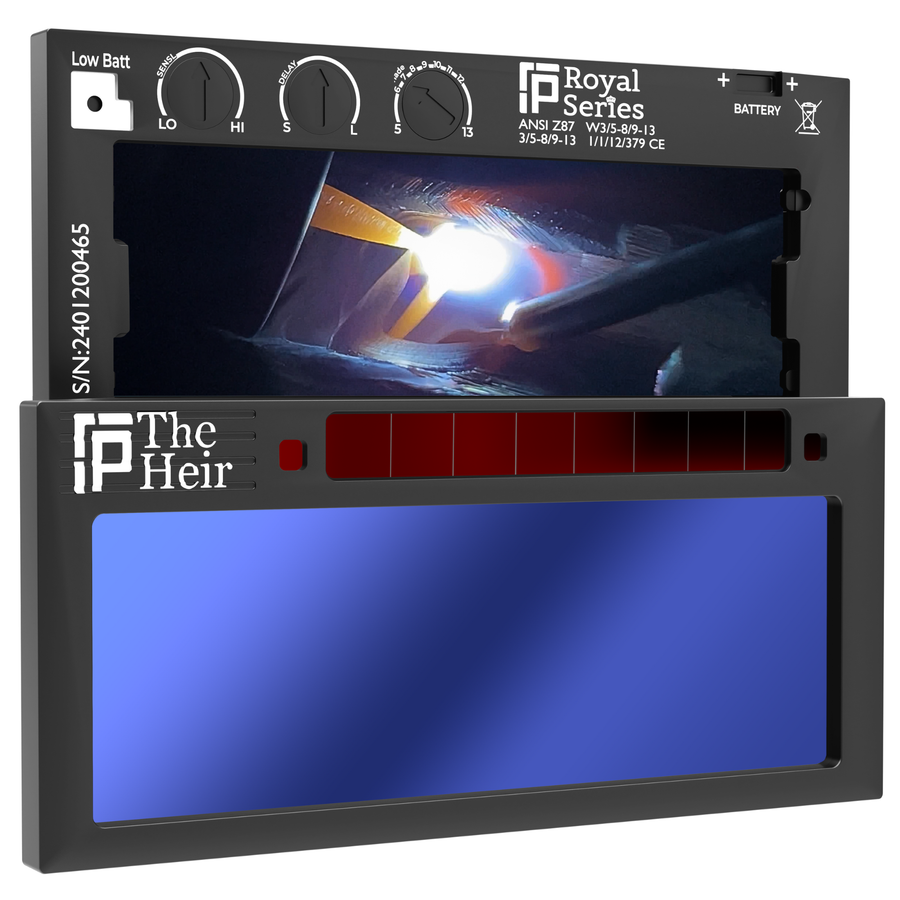
- Open Weld Heads: The arc is exposed, shielded by a gas cup. These heads are used for larger pipe welding jobs that require filler wire. Since the brilliant flash of the arc is fully exposed here, protecting your eyes while maintaining clear visibility of the root pass is essential. Because the arc is completely visible, you must use a reliable welding helmet and a TIG-rated auto-darkening lens to monitor the bead safely as it travels. To find the right tint to balance out heavy arc glare and see the puddle boundaries clearly, you can reference this detailed welding lens color guide.
- Water/Coolant System: Keeps the weld head from overheating across long weld cycles.
- Remote Pendant (Optional): Lets the welding operator monitor and adjust the process from a safe distance without stopping the automated welding sequence.
The Welding Sequence
Here is how the system works from start to finish:
- Weld Preparation: Cut the tube or pipe ends clean and square. This is where faulty welds start, before the arc ever strikes. Poor fit-up at the weld joint is the most common cause of defects in orbital tube welding.
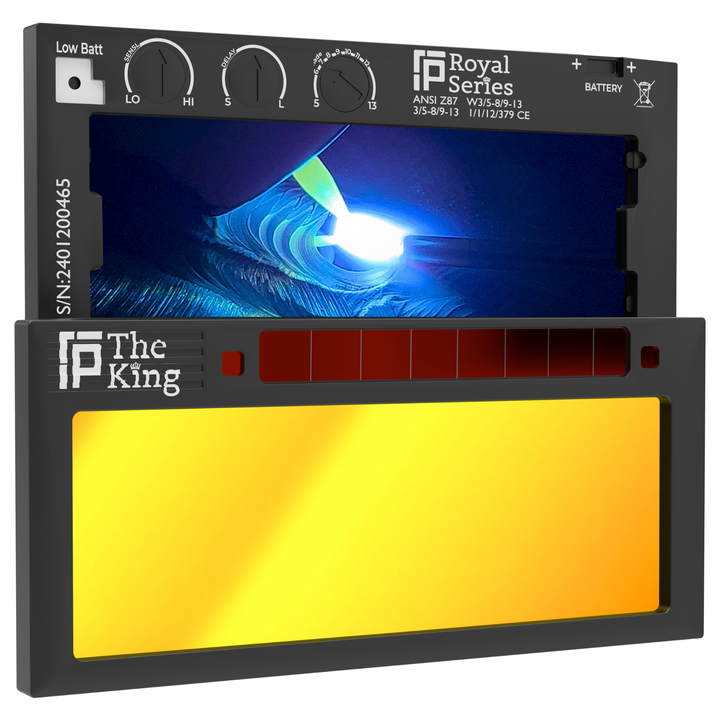
- Align and Clamp: Secure the pipe ends in position. The gap at the joint must be consistent all the way around. Test coupons should be run at the start of every welding shift. When checking these initial test passes, operators often use high-contrast gold welding lenses to clearly see the puddle boundaries and ensure the automated parameters are dialing in correctly.
- Purge the Inside: Remove oxygen from the tube or pipe using argon as the inert gas before starting the weld. Oxygen left inside causes discoloration and kills weld quality. Use purge plugs or purge trees to diffuse the gas evenly and maintain pressure on the inside of the pipe during the weld cycle.
- Load the Stored Weld Schedule: The power supply calls up the schedule for your material, tube diameters, and wall thickness. The complete weld protocol controls welding current, welding speed, arc voltage, heat input, and purge timing for the full 360-degree rotation.
- Start the Arc: The arc initiates, and the weld head begins its rotation. The weld head completes the arc without stopping. For larger orbital welding heads on open-face setups, the sequence may vary. In double-up welding, the head rotates 180 degrees from two starting points. The controller maintains a consistent weld bead width. A clean weld bead is the visible proof that the parameters were held all the way around the weld seam.
- Document the Result: Once the weld cycle completes, the power supply automatically logs the data. This is your compliance record for ASME, FDA, and ISO requirements.

What Shielding Gas Purity Actually Means for Orbital Welds
Shielding gas is one of the biggest variables affecting weld quality. Standard industrial argon at 99.995% purity is the minimum for most orbital welding work. Semiconductor and pharmaceutical piping requires ultra-high-purity argon at 99.9998%. Any moisture or oxygen contamination in the inert gas will ruin the weld seam. No exceptions.
For high-purity work, do not use rubber anywhere in your purge setup. Rubber releases oxygen and moisture into the argon stream. Use all-metal purge components.
Which Industries Actually Use Orbital Welding and Why
Orbital welding shows up wherever a failed weld cannot be tolerated. Here's why each major industry has adopted it:
Pharmaceutical and Biotech
Pharmaceutical process lines and water-for-injection systems carry ultra-pure water that must be free of bacteria. Any rough weld seam inside the piping becomes a contamination site. Orbital welding produces full-penetration welds with smooth internal surfaces that meet ASME BPE acceptance criteria. Manual welding processes cannot consistently hit that surface quality at production volume.
Aerospace and Defense
Orbital welding was invented for this industry. A commercial aircraft contains more than 1,500 welded joints in its hydraulic and fuel systems. Every weld joint must withstand extreme pressure and temperature over thousands of flight cycles. That need for reliable welds is exactly why this process was developed. Modern welding systems automatically handle those requirements.
Semiconductor Manufacturing
Chip manufacturing relies on ultra-high-purity stainless-steel process lines. Any contamination in the line contaminates the product. Enclosed weld heads with high-purity inert-gas shielding are the only way to meet these specs in orbital TIG welding applications. Orbital TIG welding in the semiconductor and pharmaceutical industries is the accepted standard. It produces the smooth, contamination-free welds these lines require.
Food, Dairy, and Beverage
Food contact piping requires consistent full-penetration welds throughout. Any rough internal surface traps product and promotes bacterial growth. FDA and sanitary codes require smooth, cleanable pipe interiors. Orbital welding delivers the consistent bead width and weld quality that hand welding can't maintain reliably in food processing and dairy production runs. Food processing facilities rely on orbital welding to comply with sanitary codes.
Oil, Gas, and Offshore
Subsea hydraulic lines are welded using corrosion-resistant steels and nickel alloys. These welds need to hold for years in various conditions with no access for repairs. Low-alloy carbon steel also appears in offshore piping applications. Orbital welding accounts for the thermal conductivity and arc-voltage requirements of these unusual materials, including corrosion-resistant steels, via the stored program, delivering superior mechanical properties compared to manual welding.
Orbital Welding vs. Manual TIG: Differences Every Welder Should Know
Here is the straight comparison for experienced TIG welders. No marketing, just the real picture.
|
Factor |
Orbital Welding |
Manual TIG Welding |
|
Consistency |
Identical welds every cycle |
Varies by operator and position |
|
Cost |
High upfront equipment cost |
Low upfront cost |
|
Applications |
Circular tube and pipe joints only |
Almost any joint geometry |
|
Speed |
Faster for repeatable high-volume runs |
Faster for one-off and field work |
|
Documentation |
Automatic weld logs |
Manual record-keeping |
|
Adaptability |
Fixed to programmed parameters |
Operator adjusts in real time |

Where Orbital Welding Wins
Where Orbital Welding Wins
Repeatability is the standout advantage. Once the welding parameters are dialed in, the orbital welder produces identical results every single cycle. Hundreds of welds, zero variation in arc length or welding current. It simply doesn't drift.
Manual welding tells a different story. Across multiple welding positions, the welder has to stop, reposition, restart. Every stop point is a potential defect waiting to happen. The orbital weld head doesn't work that way. It completes the full 360-degree rotation without interruption, laying down a continuous weld seam that no human hand can consistently replicate.
That consistency, sustained at scale, is where orbital welding systems earn their place. In applications where high-quality welds aren't a goal but a baseline, and zero-defect tolerance isn't negotiable, orbital isn't just a good option. It's what the work demands.
Automated weld documentation is also a practical advantage in regulated work. Every weld cycle is logged with its parameters. That log is your compliance record.
Where Manual TIG Welding Still Wins
For one-off welds and field repairs, setting up orbital welding equipment is often not practical. Straight TIG welding is usually faster and gives welders more flexibility for single joints and changing field conditions. It also works better for unusual joint geometries, which are more commonly handled with manual welding.
Orbital welding is mainly built for circular pipe joints, so non-circular joints are still better suited for hand welding. Manual welding also gives experienced welders an advantage when conditions change during the job. If the fit-up shifts or varies mid-weld, a skilled welder can adjust instantly and keep the weld on track. Whether you are striking a manual torch or setting up an orbital guide track, keeping crisp, clear replacement lenses in your hood ensures you never misjudge the joint alignment. The orbital welding system follows its program.
The cost of orbital welding equipment is a real factor. Manual TIG welding has a lower upfront cost, typically requiring just a power source, torch, and filler material, making it accessible for small shops and field work. welding equipment typically runs between $500 and $3,000 for a quality power source, with torches, regulators, and consumables adding another few hundred dollars.
Entry-level orbital welding equipment currently starts around $15,000 to $30,000 for the power supply alone. Complete systems with weld heads run $50,000 or more.
The orbital weld head doesn't replace certified TIG welders. It replaces the inconsistency that even skilled welders can't fully eliminate on repetitive, high-stakes joints.
What the Orbital Welding Operator Still Needs to Get Right
In orbital welding, the human doesn’t just disappear once the weld head clamps on. Instead, the operator monitors the process, sets weld programs, manages purge setup, and is responsible for joint prep. The welding tool handles the arc. You handle everything else.
Joint Prep Is Still on You
Orbital welding does not fix poor weld preparation. Pipe ends must be cut clean and square. Remove scale, oil, and oxidation from the joint area before clamping. If the material going into the weld head isn't clean and properly fitted, no stored program can save the result.
Shielding and Purge Setup
Proper inert gas distribution inside the pipe matters as much as purity. Use the correct purge plugs to evenly diffuse the gas. Uneven distribution causes defects even with correct argon purity. Confirm the purity of your shielding gas at the source before every run.
Frequently Asked Questions
How Much Does Orbital Welding Equipment Cost?
Entry-level orbital welding equipment starts at roughly $15,000 to $30,000. The orbital welding power supply alone typically accounts for $10,000 to $20,000 of that cost. Complete orbital welding systems with enclosed weld heads for high-purity applications can run $50,000 or more. The return on investment comes from reduced rework, faster weld cycles, and automatic weld documentation for compliance. This is capital equipment, not a consumable purchase.
Do You Need to Be a Certified Welder to Operate an Orbital Welder?
You don't always need certification to operate the weld head, but the person setting welding parameters and writing weld programs needs a solid understanding of TIG welding and material behavior. ASME and other codes in regulated industries may still require a certified welder of record regardless of whether the welding tool is automated.
Can Orbital Welding Be Used on Carbon Steel, Not Just Stainless Steel?
Yes. Orbital welding works on stainless steel, low-alloy carbon steel, corrosion-resistant steel, titanium, aluminum, and nickel alloys. Unusual materials require program adjustments to the filler material and shielding gas selection. Stainless steel and titanium are the most common because they are commonly used in high-purity system piping.
What Tube and Pipe Size Range Does Orbital Welding Work On?
Enclosed orbital heads for tube welding typically handle tube diameters from 1/16 inch up to 6 inches. Open-weld pipe welding heads can handle larger tube diameters, depending on the guide ring and clamping system. Wall thickness determines whether the program calls for a single fusion pass or requires wire-feed passes to complete the joint.
How Long Does It Take to Set Up an Orbital Weld Program?
For a standard application on a familiar material and size, an experienced operator can develop a weld program in one to two hours. A new application with an unusual alloy or tight tolerance spec can take a full day, including weld coupons. Once the weld procedure is qualified, the stored schedule is recalled instantly for every subsequent weld cycle.
Can You Use Orbital Welding Outdoors or in the Field?
It can be done in the field, but wind disrupts the inert shielding gas envelope, leading to weld defects. Field orbital welding requires windshields or an enclosed setup. Orbital welding machines are also significantly bulkier than a standard TIG setup. For open-air job sites, straight TIG is usually a more practical choice.
Is Orbital Welding the Same as Robotic Welding?
No. Robotic welding uses multi-axis robot arms for a wide range of joint types and welding positions. Orbital welding is specifically engineered to rotate around a cylindrical tube or pipe joint. Orbital welding systems are purpose-built for that single application and produce more consistent results on circular pipe joints than a general-purpose robot typically delivers.
How Do You Inspect an Orbital Weld to Confirm It Passed?
Visual inspection of the outer weld seam is the first step, checking for discoloration, porosity, or incomplete fusion. In pharmaceutical and semiconductor applications, borescopes are used to inspect the internal weld surface. Additional inspection methods include radiographic testing, dye penetrant testing, and hydrostatic pressure testing, as required by code. The system also generates automatic weld logs that serve as part of the quality documentation record.
Conclusion
Orbital welding is an automated TIG built for pipe and tube applications where reliable welds and consistent weld quality are not optional. It removes operator variability from the repetitive, high-stakes parts of the job and consistently delivers high-quality welds. The orbital welder handles the arc, travel speed, and documentation. You handle joint prep, purge setup, and the stored program.
The technology replaces the inconsistency that even skilled welders can't fully eliminate when running the same joint through the weld head hundreds of times.