


A welding hood is your first line of defense against arc flash, spatter, and sparks on every job. While most welders are familiar with passive and auto-darkening hoods, there's a third option that doesn't get nearly enough attention: the pancake welding hood.
Unconventional and looking nothing like a regular welding helmet, this kind of hood has been used by welders for many years, and there are good reasons why. Is the pancake welding hood new to you? This guide covers all the details, from how it's built to the lenses you can use with it.
What is a Pancake Welding Hood?
The pancake welding hood is a type of welding helmet made from a round, pancake-shaped box of balsa or pine wood that sits against the welder's face, holding the welding lens securely. The pancake welding hood is quite different from regular welding helmets, which have plastic shells and flip-up lenses, since this hood uses a contoured balsa wood box that fits snugly against the face and blocks any peripheral light.
The precision handcrafted balsa box is the defining feature of the pancake hood. Balsa wood is light, easy to sand and shape, and comfortable against the skin, which is why it has always been used to manufacture pancake hoods.
Typically, pancake hoods are handmade, with a specially shaped balsa box designed to accommodate lenses of various sizes. Pancake welding hoods also feature a folded ear-guard design that wraps around the sides of the face, providing additional protection against sparks.
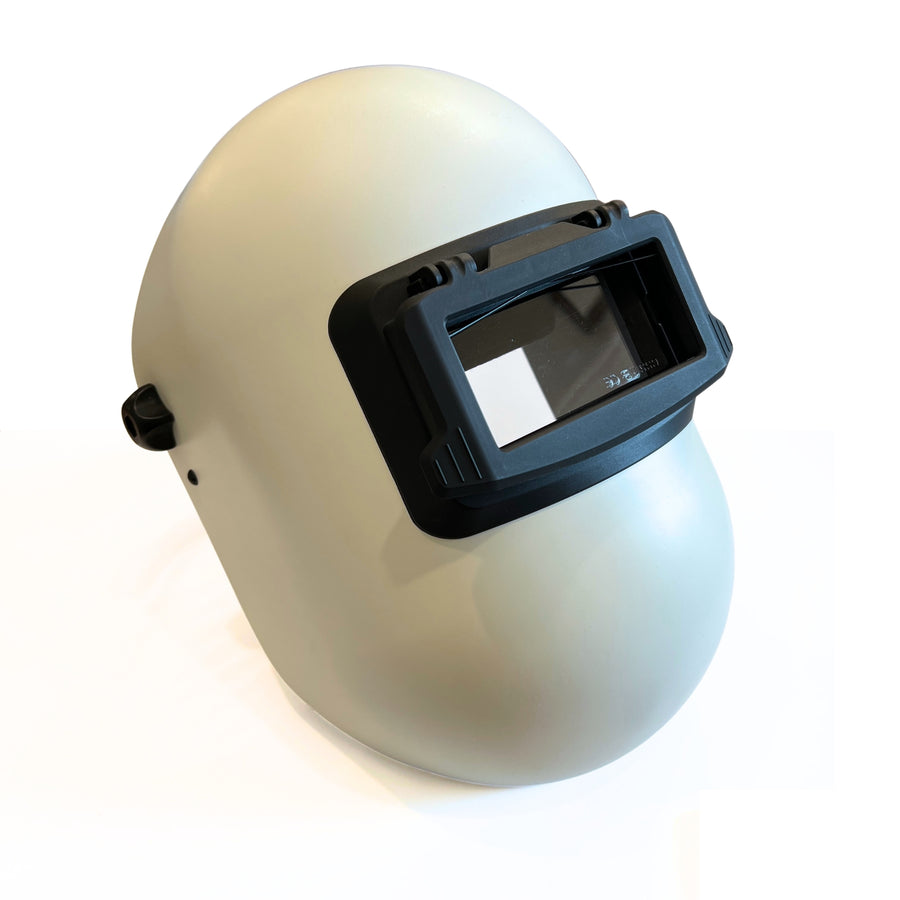
Types of Welding Hoods: A Quick Comparison
Passive Welding Hoods
Passive welding hoods have a fixed-shade lens that's unaffected by changes in light. The welding lens remains dark at all times, and welders flip the hood up and down manually between welds. These welding hoods are simple, durable, and don't rely on batteries or electronics, making them easy to maintain and operate. Passive hoods are OSHA accepted and work across a wide range of welding applications.
Auto-Darkening Welding Hoods
Auto-darkening welding hoods use a lens that automatically adjusts its shade in response to the welding arc. When the arc isn't active, the lens remains light enough for you to see clearly. As soon as the arc strikes, the lens darkens to protect the eyes. Auto-darkening hoods are popular among welders who often switch between welding and inspecting their work.
Pancake Welding Hoods
Pancake welding hoods work completely differently. Rather than using a full helmet shell, they utilize a specially designed balsa box that's shaped to fit snugly against the head of the welder, with ear guards that are folded to block light and sparks coming from the side. Lightweight and custom-fitted, pancake hoods are built for welders who need a secure, close fit in tight or awkward positions.

Advantages of Using a Pancake Welding Hood
Pancake welding hoods continue to be very popular after many years because they deliver where it counts. Here are some of the reasons why welders love using them.
Lightweight Design
Balsa wood is one of the lightest materials used in welding hood construction. Lightweight pancake welding hoods reduce neck strain during long welding sessions, a significant advantage for pipeline welders who spend extended periods in uncomfortable positions.
Outstanding Light Blocking
The contoured balsa box hugs the face snugly, while the folded ear guard design shields the eyes from any light coming from the sides. This provides a darker and clearer field of vision than most conventional welding helmets offer.
Custom Fitting
Pancake hoods are designed for a custom fit. The balsa box can be sanded and shaped to match the welder's face. This gives an edge in terms of comfort and safety compared to off-the-shelf helmet shells.
Lens Flexibility
Most popular models allow the use of various lenses in different sizes. They often have easy side or bottom loading with closures. This gives welders the freedom to select the best lens for their particular welding process. There are also smaller (old-style) models available for welders working in tight spaces.
Durability
The phenolic faceplates and high-quality balsa wood ensure the durability of pancake hoods. With proper care, a well-manufactured pancake hood will last much longer than many standard plastic helmets.

Differences Between Pancake Welding Hoods and Other Welding Hoods
Pancake welding hoods are distinct in terms of their shape, weight, and performance. Two of the most common alternatives to the pancake hood are the pipeliner and sugar scoop welding hoods.
Pancake Welding Hoods vs. Pipeliner Welding Hoods
Among the alternatives for pancake welding hoods, pipeliner welding hoods are the most similar. Both hoods provide a compact, close-fitting design that works well in tight positions. However, there's a key difference in their construction.
Pipeliner hoods use a plastic or fiberglass shell as opposed to a contoured balsa box, making them heavy and hard to customize. For welders who prioritize fit and light blocking over convenience, pancake hoods have the edge.
Pancake Welding Hoods vs. Sugar Scoop Welding Hoods
The sugar scoop welding hood is so named because of its design. The hood is deep and curved, projecting outward from the face more than a standard hood. While the design ensures adequate protection against spatter and sparks, it’s bulky and heavier than the pancake hood. Sugar scoop hoods also don't offer the same level of peripheral light blocking as the pancake hood.
| Feature | Pancake Hood | Pipeliner Hood | Sugar Scoop Hood |
| Comfort | Custom fit, conforms to face | Fixed sizes, less adaptable | Bulkier fit, more distance from face |
| Design | Contoured balsa box, folded ear guard | Plastic or fiberglass shell | Deep curved shell |
| Glare/Fogging | Superior peripheral light blocking | Moderate light blocking | Moderate light blocking |
| Weight | Lightweight balsa construction | Moderate weight | Moderate to heavy |
| Welding Environment | Pipeline, tight spaces, outdoor construction | Pipeline, general fabrication | General fabrication, overhead work |
Lens Options for Pancake Welding Hoods
One of the most significant benefits of pancake welding hoods is the variety of lenses they can accommodate. Nearly all popular brands accommodate a wide range of lenses, making it easy to tailor the hood to your specific welding application. The only lens type pancake hoods don't accommodate is a cheater lens.
Here are five lens options you can buy:
- The Heir Adjustable 2.0 Auto Darkening Lens is an auto-darkening lens with adjustable shade, TIG rating, and a built-in grinding mode. It's suitable for numerous welding applications and is a strong choice for welders who need flexibility across different processes in a single lens.
- The Heir 2-Tone Fixed Passive Lens is a fixed passive lens in a deep blue and purple finish. It's reliable and straightforward, built for welders who want a good passive design without the frills.
- The Duke 2-Tone Fixed Passive Lens. A passive lens finished in a vibrant red-and-gold color scheme, The Duke 2 Tone delivers consistent shade and clear sightlines, with a distinctive look that stands out.
- The King 2-Tone Fixed Passive Lens is a fixed passive lens in gold and light blue. It's ideal for welders who want reliable passive protection with an excellent finish and optical clarity throughout their work shift.
- The Prince Adjustable 1.0 Auto Darkening Lens is a silver auto-darkening lens. While it's not recommended for use in TIG welding, it's great for MIG, stick, and flux-cored arc welding.

Frequently Asked Questions
What Is a Pancake Welding Hood Used For?
Pancake welding hoods are primarily used in pipeline welding, where a lightweight, custom-fitted hood that blocks peripheral light is essential. Their compact design and custom fit make them well-suited for welding in tight, awkward, or outdoor positions where standard welding helmets are impractical.
How Is a Pancake Welding Hood Different From a Regular Welding Helmet?
A regular welding helmet uses a plastic or fiberglass shell that sits away from the face. A pancake hood uses a contoured balsa wood box that fits directly against the face, blocking peripheral light and sparks more effectively. The one-piece pressure fit system also provides a more secure hold than standard helmet straps.
Can Beginners Use a Pancake Welding Hood?
Pancake welding hoods can be used by beginners, but they're most commonly associated with experienced pipeline welders. The custom fitting process, which includes sanding and shaping the balsa box to fit the face, requires some patience.
Once fitted correctly, however, the hood is straightforward to use and offers protection and comfort that beginners and experienced welders alike can appreciate. You can read our blog for tips on welding for beginners.
Can Pancake Welding Hoods Accept Auto-Darkening Lenses?
Yes. Most popular pancake hood models accept both passive and auto-darkening lenses, giving welders the flexibility to choose the lens that best suits their welding application. They're also compatible with glasses. The only lens type pancake hoods don't accommodate is a cheater lens.
Conclusion
The pancake welding hood isn't the most well-known piece of welding equipment. However, for the welders who use it, it's hard to replace. The close fit, lightweight balsa construction, and excellent peripheral light blocking make it a great tool for many welding environments.
If you're considering making the switch, start with quality construction and a hood that fits your face correctly. From there, the lens you choose will determine how well the whole setup performs.