


Weld quality is not subjective; a weld either meets structural and visual standards, or it does not. The difference between a good weld and a bad weld comes down to consistency, control, and proper technique. For professional welders, this is about improving performance and safety standards, but for beginners, it's about building the right habits early.
Understanding what a strong weld looks like is one of the most important skills you can develop because it allows you to catch mistakes as soon as you start welding, improve faster, and ensure every weld is reliable.

What Does a Good Weld Look Like?
Learning how to weld takes time, attention, effort, and precision. A good weld reflects proper heat control, correct travel speed, accuracy, and patience, and full fusion between materials. When all of these factors are aligned, the result is a weld that is both strong and consistent.
Uniform Bead Appearance
The most immediate sign of a high-quality weld is a uniform bead. The weld should maintain proper proportions from start to finish, without sudden changes or irregularities.
A consistent bead shows that the welder maintained steady control throughout the process. It should:
- Be seamless all the way through
- Have no excessive spatter
- Have no sections where the weld thins out unexpectedly
This level of consistency is often described as "stacking dimes", especially in TIG welding, with each ripple evenly spaced.
You can use our welding tools and gear guide to find equipment that will help you get the most uniform bead appearance while improving your skills.
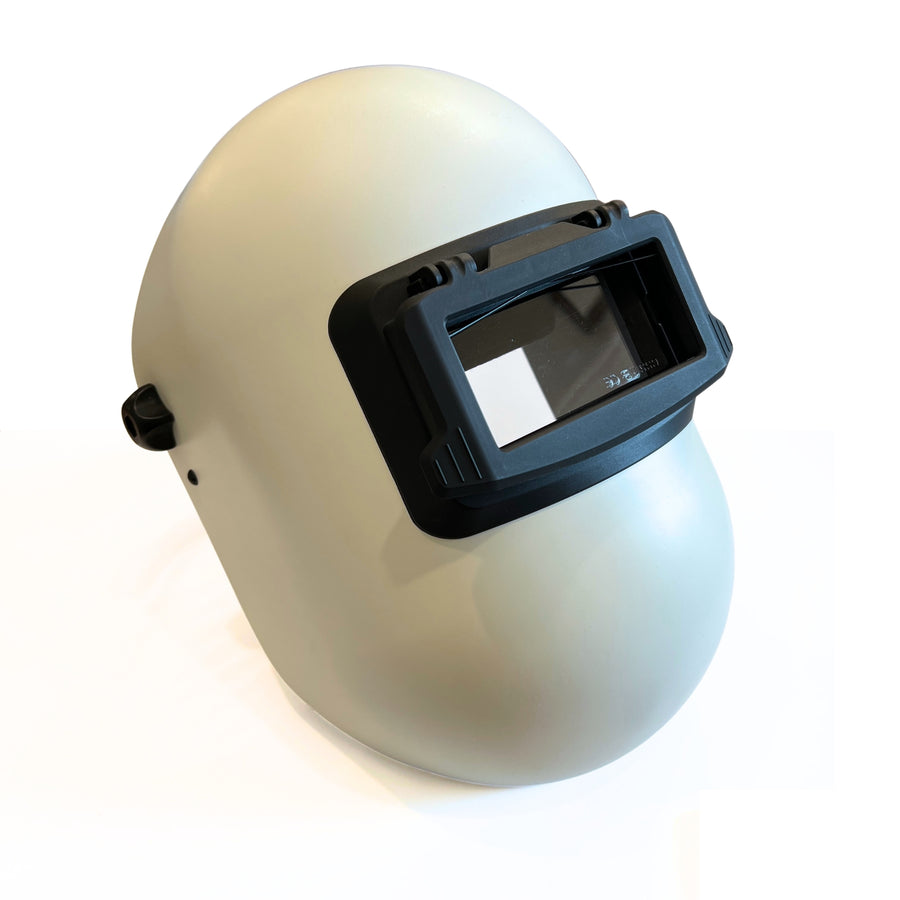
Pipeliner Welding Hoods
Designed with high standards in mind
Shop NowSmooth Ripples and Clean Transitions
Beyond consistency, the surface texture of the weld matters. A good weld will have smooth, uniform ripples that flow evenly across the joint. They shouldn't look jagged, chaotic, uneven, or overly spaced out.
The edges of the weld are equally important. The transition from weld metal to base metal should be flush and gradual. There shouldn't be any overlap of excess material spilling onto the base or gaps where the weld fails to connect cleanly. Tidy transitions indicate that the welder maintained proper welding torch angle and travel speed.
Proper Fusion and Penetration
Surface appearance alone isn't enough to determine weld quality. A weld can look clean on the outside but still fail if it lacks proper penetration throughout.
Penetration refers to how deeply the weld fuses into the base metals. A good weld fully joins both pieces, creating a strong bond that can handle stress and heavy loads. If the fusion is too shallow, the weld sits on top of the material rather than becoming part of it. It creates weak points within the joint that compromise its structural integrity.
Absence of Defects
A good weld should, naturally, be free of visible defects. While minor imperfections may occur, major flaws should never be seen in a quality weld.
Common defects that shouldn't appear include:
- Porosity (which shows up as small holes or bubbles)
- Cracks, either on the surface or along the weld bead
- Slag inclusions trapped within the weld
- Inconsistent bead formation
- Undercut along the edges of the joint
Each of these issues weakens the weld and harms its long-term performance.
Minimal Spatter
Spatter refers to small droplets of molten metal that scatter around the edge of the weld area, and it's a sign of more than just messy welding. Some processes naturally produce more spatter than others, but excessive spatter usually indicates poor weld technique or incorrect settings.
A good weld keeps spatter to a minimum. The surrounding area remains relatively clean, with little need for post-weld cleanup. This reflects stable arc control and proper parameter setup.
What Does a Bad Weld Look Like?
A poor weld is not always as subtle as you might think. In most cases, they show clear signs of problems in technique, setup, equipment, or environment, and recognizing them early allows you to correct issues before they lead to failure.
Porosity
Porosity appears as small holes or bubbles in the weld bead that form when gas becomes trapped in the molten weld pool and solidifies before escaping. It is often caused by:
- Contaminated materials or surface
- Improper shielding gas coverage
- Incorrect torch settings or welding techniques
- Moisture in the electrodes or on the base metal
Porosity internally weakens the weld and causes cracking over time.
Cracks
Cracks are one of the most serious weld defects, and they generally form during cooling or after the weld has been put into service. These fractures completely compromise the weld's integrity, so even a small crack can propagate under stress. Cracks are typically caused by:
- Improper heat input
- Rapid cooling
- High residual stresses exceeding the weld material strength
- Hydrogen embrittlement (atomic hydrogen penetrates molten weld metal, causing loss of ductility and catastrophic cracking as it cools)
Undercut
Undercut occurs when the base metal along the edges of the weld melts away but isn't properly filled with weld material, leaving a visible groove along the weld toe. This groove reduces the joint's strength and creates a point where cracks can develop. Undercut is usually the result of excessive heat or a rushed weld.
Lack of Fusion
Lack of fusion occurs when the weld metal fails to bond properly to the base material. Instead of forming a solid joint, the weld sits on top of the surface. This defect is often caused by:
- Insufficient heat input
- Poor adhesion
- Incorrect welding angle
- Excessive travel speed
- Improper electrode angles
- Surface contamination
It's one of the leading causes of weld failure because it creates a weak connection between the materials.
Inconsistent Bead Formation
An uneven weld bead is a clear sign of poor control. The bead may vary in width, height, and pattern, with visible starts and stops. This inconsistency usually comes from:
- Unstable hand movement
- Using the wrong settings or welding parameters
- Poor visibility during the welding process
- Improper operator techniques
- Unstable arc conditions
Inconsistent bead formation indicates that the welder was unable to maintain a steady hand throughout the process.

Different Welding Processes for High Quality Welds
Not all welds are created using the same process. Different welding methods:
- Have varying levels of control
- Produce different bead appearances
- Impact production efficiency
- Have different operational costs
- Impact structural integrity
- Have different potential defects
Understanding how each process works and how a quality weld should look in each case helps you set the right expectations and identify problems faster.
Each method has its strengths, but you need to know what a good result looks like for the process you're using.
MIG Welding
Gas metal arc welding (MIG welding) is one of the most widely used welding processes due to its speed and ease of use. It's common in:
- Fabrication
- Automotive work
- Shipbuilding
- Construction (structural steel)
- General-purpose welding
A good MIG weld is defined by consistency and control, even at higher speeds. The bead should be smooth and uniform, with a slightly rounded profile. It shouldn't be overly tall or excessively flat. Penetration is important because it's easy to move too quickly and end up with a weld that isn't fully bonded.
MIG welding naturally produces some spatter, but excessive buildup around the weld usually indicates an issue with voltage or wire feed speed. A MIG weld should be clean, smooth, well-penetrated, and reliable.
TIG Welding
Gas tungsten arc welding (TIG welding) is known for precision and control. It's often used in applications where appearance and quality are critical, such as:
- Aerospace
- Piping
- Medical devices
- Food/pharmaceutical processing
- High-end fabrication
A TIG weld typically has a distinct pattern along the bead, with each ripple evenly spaced. This is done with the precise control of filler metals, torch movements, arc length, and heat input. A high-quality weld will show good fusion without excessive buildup or burn-through.
Cleanliness is especially important in TIG welding. The process is sensitive to contamination, so a good weld should be free from discoloration, porosity, moisture, or inclusions. When executed properly, TIG welding produces some of the most visually precise welds.
Stick Welding
Shielded metal arc welding (or stick welding) is known for its durability and versatility. It's commonly used in construction, outdoor work, shipbuilding, infrastructure repair, and heavy-duty applications where conditions are less controlled.
A good stick weld looks different from MIG or TIG, but the same principles apply. The bead will typically be thicker and less refined in appearance, but should still be consistent. The width and height should remain steady across the joint, with minimal variations. Slag is normal, but it must be properly managed.
Penetration is usually strong with stick welding, but it must be controlled. Too much heat can cause distortion, while too little may result in weak bonding. It's not as polished as TIG welding, but it still shows proper fusion and structural reliability.

Visual Inspection: Testing Your Welds
Visual inspection is the first and most important step in evaluating weld quality. Before any advanced testing methods are used, a weld should pass a basic visual check.
Start by examining the overall consistency of the bead. The weld should maintain a uniform width and height from start to finish, and have a smooth surface with clean transitions between the junctions. Defects should be easy to identify, especially with proper lighting and visibility. If the weld looks good, it's more likely to perform well under pressure.
Welding Equipment That Supports Better Welds
Having the right equipment is the most important step in creating good welds. If you're new to welding, you may be wondering what you need to weld. A reliable helmet and high-quality lens aren't optional; they directly affect your ability to produce clean, accurate welds.
Welding Helmets
Welding helmets are built to perform, with strong fiberglass constructions that balance durability, strength, heat resistance, and lightweight comfort. They hold up in demanding environments without adding unnecessary weight during long sessions. Our helmets are designed to fit any welding lens thickness, providing flexibility without modification.
If you rely on magnification while welding, you'll need a helmet that supports cheater lenses (which ours don’t), but otherwise, you can pair our helmets with any lens thickness. You'll benefit from improved clarity throughout your welding sessions.
Welding Lenses
The welding lens is just as important as the helmet. It's the component that allows you to see the weld puddle clearly, improving control and accuracy while reducing guesswork. You can track the weld as it forms, allowing you to maintain even spacing and make adjustments when necessary.
Our lenses are designed to work seamlessly with their helmets, without limiting thickness or fit preferences. For additional protection, add a clear lens to extend your welding lens's lifespan while maintaining visibility. You could also consider an adjustable auto-darkening lens once you have a bit more experience.
You'll find your welds look better when you use high-quality lenses. If you're uncertain about which lens shade or tint is best for your needs, this welding lens color guide looks at the differences and when each is best.

Frequently Asked Questions
What Is the Most Important Sign of a Good Weld?
A consistent weld bead is the most important sign of a good weld. It should also have smooth ripples and clean edges.
Can Weak Welds Still Look Good?
A weld can appear clean but lack proper penetration or fusion. Internal strength matters just as much as surface appearance, so always test your welds.
How Can I Improve Weld Quality Quickly?
Focus on visibility, consistent movement, skill development, and controlled heat input. Small adjustments in these areas can make a significant difference.
Does Equipment Affect Weld Quality?
Reliable, high-quality gear and clear visibility both improve control, which directly leads to better weld consistency and quality.
Conclusion
Welding is a skill built through repetition and attention to detail. Knowing what to look for is the first step, but applying that knowledge consistently is what leads to improvement. Reviewing your own welds, identifying flaws, and correcting them over time will build better habits and stronger results.
A good weld is ultimately defined by its strength, permanence, and clean execution. It reflects control over every part of the process, from heat input to torch movement. Bad welds show the opposite, revealing instability, poor technique, and weak bonding.
The difference is visible, and once you know what to look for, it becomes easy to identify. With the right knowledge and the best equipment, you can produce welds that are not only clean in appearance but also reliable in performance.