


If you've looked at a welding machine and wondered what you actually need to start welding, this guide cuts through the guesswork. It covers safety gear, welding tools, and how to pick your first welder — so you can get to work instead of wondering where to begin.
Most basic welding machines and accessories, including MIG welders, are available at your local hardware store, which makes it straightforward for beginners to get started without tracking down specialty suppliers.
Welding involves intense heat, a bright welding arc, and a range of different materials, so the right equipment and protective gear matter from day one. This guide covers stick welding, MIG welding, flux core, and TIG welding, explains which welding process fits which job, and outlines the specific tools and accessories that make each one easier.
Key Takeaways
-
Safety gear must protect against intense UV/IR radiation, extreme heat, and toxic fumes.
-
Proper welding safety gear includes an auto-darkening helmet, leather gloves, and a fire-resistant jacket.
-
A welding helmet protects your face and head from sparks and debris, and shields your eyes from infrared and UV light that can cause permanent eye damage.
-
Heavy-duty, fire-resistant leather gloves are essential for protecting your hands and wrists from extreme heat and sparks.
Basic Safety Rules to Follow Before You Start Welding
-
Keep your workspace clean, uncluttered, and away from flammable materials such as wood, cardboard, rags, fuel, and paint, so sparks don't quietly start a fire.
-
Work in a brightly lit area so you can clearly see your joint, your welding arc, and any cables, tools, or obstacles around your feet.
-
Good ventilation is non-negotiable when welding indoors. Fumes and fine particles from the welding process build up fast in a closed space.
-
Stay in the shop for 20–30 minutes after welding to confirm that no hidden embers are still smoldering in your equipment or in nearby materials.
Protective Equipment You Need for Safe Welding
Auto-Darkening Welding Helmet and Lens
A welding helmet should fully cover your face with a sturdy shell and solid lens area, so sparks and debris can't reach your eyes or skin. If you're still deciding, this best welding hoods guide can help. An auto-darkening helmet is worth it. The lens darkens the moment the arc starts and clears when it stops, so you can position the metal without constantly flipping your hood up and down.
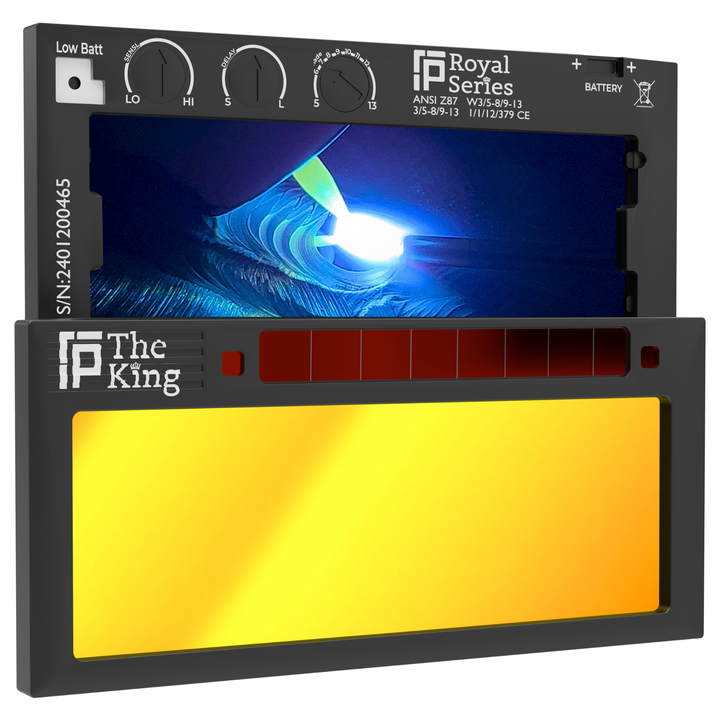
Look for a lens with the right shade range, a fast response time, and good optical clarity so you can see the weld puddle clearly during MIG, stick, TIG, and flux core welding. Better lenses reduce eye strain and help protect your vision during long sessions — a worthy investment over bargain options. If you want to upgrade clarity and reduce glare, you can browse high-quality welding lenses. Gold-coated options are also worth checking out for improved visibility in bright arcs.
Wear a welding cap under your helmet to protect your head and ears from sparks that slip in around the edges of the hood.
Welding Gloves, Jackets, and Protective Clothing
Welding gloves made from heavy leather or heat-resistant materials are a must. Your hands and wrists need protection from sparks, hot metal, and intense heat. Use thicker gloves for MIG and stick welding, where spatter and heat run higher. Switch to lighter, more flexible gloves for TIG welding when you need finer control.
A welding jacket made from leather or fire-resistant fabric shields your arms and torso from heat, UV radiation, and spatter. Skip synthetic clothing — it can melt. Long-sleeve cotton or FR-rated clothing resists heat and protects your skin far better. Keep cuffs, pockets, and collars closed or covered so sparks and particles can't get trapped against your skin. Never have cuffs on your pants. Cuffs act as "spark catchers" and can lead to your leg catching fire.
High-top leather boots with steel toes are the right footwear. Sparks and slag can burn through or crush unprotected feet. Open shoes, sneakers, and mesh footwear offer almost no protection from hot metal or molten spatter.
Respirators, Fume Extraction, and Protecting Your Lungs
Wear a respirator when welding, grinding, or working with rusty, painted, or coated metal. Fumes and dust from these surfaces can contain harmful metals and chemicals.
Choose filters rated for welding fumes and small particles, which are the contaminants doing the most damage.

What Do You Need to Start Welding? Essential Tools and Accessories
Basic Tools You Need to Prepare and Clean Metal
-
An angle grinder is one of the most-used tools in any welding setup. Use cutting discs to cut stock to length, and grinding or flap wheel attachments to strip rust, paint, and mill scale before welding.
-
Keep a wire brush close by for scrubbing the weld zone and cleaning between passes. It makes finished welds stronger and cleaner.
-
A chipping hammer removes slag after stick and flux-core welding so that you can inspect the beads for defects. Preparing metal properly is the foundation of strong welds, regardless of which welding method or machine you're using.
Clamps, Magnets, and Setting Up Your Weld Joints
-
C-clamps, locking pliers, and welding magnets hold metal in place so joints stay aligned and gaps stay consistent while you weld.
-
Clamp parts to a steel-topped welding table whenever possible — it lets you secure pieces from multiple angles and stops them from shifting mid-weld.
-
Check alignment with a square or straightedge before tacking so you don't lock in a twist or bend that's difficult to correct later.
-
Thinner metals and longer joints will move as they heat and cool. More clamps help control warping.
-
As your projects get bigger or more complex, add more clamp sizes and styles. Treat them as core welding tools, not optional extras.
Marking, Measuring, and Layout Tools You Will Use Often
-
Soapstone or heat-resistant markers are the go-to for laying out cut lines, bend lines, and weld locations on metal.
-
Keep a tape measure, square, and angle finder at arm's reach so you can check lengths and angles before striking an arc.
-
Mark centerlines and reference points to position brackets, tabs, and joints consistently across multiple parts. Recheck critical dimensions after tacking — a small shift early on can lead to large errors in the final assembly.
-
Store your layout tools next to your welding table. When they're within reach, they become part of the workflow rather than something you skip.

Welding Accessories That Make the Job Easier
-
Welding pliers earn their place on your belt or table. You can use them to trim welding wire, clean nozzles, and handle hot pieces safely during MIG or flux-core welding.
-
Stock spare contact tips, nozzles, and lens covers so you can swap out worn parts fast and keep your welding arc stable with clear visibility.
-
Extra wire brushes, slag hammers, and small files round out the kit for cleaning and smoothing edges around finished welds.
-
If you use low-hydrogen stick rods, consider a rod oven. A dedicated storage solution, such as a welding rod oven, helps keep moisture out and maintain consistent weld quality. Keeping rods dry stabilizes arc performance and weld quality.
-
Build your kit gradually. Add better clamps, magnets, and storage as you figure out what's actually slowing you down.
Which Welding Technique Should You Start With?
The Most Common Options for Beginners
Stick welding (shielded metal arc welding) uses coated rods that generate the arc, shielding cloud, and slag as they burn. It performs well on thicker metals and dirtier surfaces, making it a popular choice for home shops. Stick welding handles most alloy metals and works both indoors and outdoors. If you plan to work with tougher materials, this guide on how to weld cast iron explains what to expect.
MIG welding (metal inert gas) uses a MIG welding machine that feeds welding wire through a gun, while shielding gas from a cylinder protects the weld from contamination. It's the most widely used welding process in the world.
Flux core welding uses flux core wire that generates its own shielding cloud, so it holds up outdoors, where wind would scatter traditional gas shielding away. Flux-cored arc welding is widely used in construction for its speed and the fact that it doesn't require shielding gas.
TIG welding (tungsten inert gas) uses a non-consumable tungsten electrode, a separate filler metal, and a shielding gas, giving you greater control and very clean welds on stainless steel, aluminum, and other nonferrous metals. TIG welding offers a level of precision that the other processes can't match. It's particularly well-suited for thin sections of nonferrous metals like aluminum, magnesium, and copper alloys.
Multi-process welders combine MIG, stick, flux core, and sometimes TIG in a single machine, which gives you flexibility as you learn and work with different materials.
Comparing Welding Types: Pros, Cons, and Best Uses
-
Stick welding is affordable, portable, and solid for thicker metals, cast iron, and outdoor repairs. The trade-off is more slag and more difficulty with thin sheet metal.
-
MIG welding is fast, relatively easy to learn, and performs well on mild steel sheet and tubing. It requires shielding gas, a gas hose, and careful attention to wind and settings.
-
Flux core welding is strong and practical outdoors and on thicker materials. No separate gas is needed, but it produces more smoke and requires more slag cleanup afterward.
-
TIG welding delivers the highest level of control and the cleanest-looking finished welds, especially on aluminum alloys and stainless steel. It's slower and demands solid preparation and coordination.
-
Multi-process welders make great machines for shop use or anyone who needs versatility (MIG, TIG, and stick welding in one unit).
-
Professional welders working in commercial or industrial settings need machines with higher duty cycles to handle continuous, heavy-duty work.
Your best first welder comes down to the projects you actually plan to do, the materials you'll mostly work with, and whether speed, versatility, or precision matters most to you.

What You Need to Weld With Each Type of Machine
With a MIG Welder
A MIG welding machine has a built-in feeder that pushes welding wire at a steady rate through the MIG gun. Pair your machine with the correct solid wire size and a matching shielding gas — a 75/25 Argon/CO₂ mix works well for mild steel.
Set up a gas cylinder, regulator, and gas hose, then check for leaks to keep your shielding gas flow consistent during MIG welding. Keep spare contact tips, nozzles, and liners ready, so wire feeding and arc stability stay where they need to be.
With a Flux Core Welder
Load your machine with the correct flux-core wire and set the polarity according to the wire manufacturer's specs. Flux core welding is the right choice outdoors or in breezy areas where gas shielding would get blown off the metal. Practice adjusting your travel speed and stick-out so the flux core process gives you consistent penetration and bead shape.
With a Stick Welder
Use a stick welder with an amperage range sufficient for the metal thickness you'll be working with most often. A rod oven for low-hydrogen rods helps keep moisture levels in check and reduces the risk of porosity or cracking. Keep a chipping hammer and a wire brush close by to remove slag after each pass, so you can inspect and add more weld where needed.
Adjust your amperage and travel speed on scrap before welding anything important — especially on thicker metals or cast iron.
With a TIG Welder
You'll need a TIG-capable machine, torch, and foot pedal to control amperage smoothly through the weld. Choose tungsten electrodes sized for your current range and grind them correctly for a stable TIG welding arc.
-
Match your filler metal rods to the base metal — specific alloys matter for aluminum, stainless, and other nonferrous metals.
-
Use pure Argon as your shielding gas and dial in the flow rate to protect both the puddle and the hot tungsten from contamination.
-
A clear, responsive auto-darkening helmet makes a real difference with TIG. The arc and puddle are smaller, and you need to see them clearly.
How To Choose Your First Welder Based On Your Projects And Budget
Identify Your Projects and Metals First
Start by listing the projects you actually want to tackle (e.g., auto repair, yard equipment, home brackets, railings, metal sculptures) and match them to the metals you'll mostly be working with: mild steel, aluminum, stainless, cast iron, or a mix.
Match Metal Thickness to Welding Process
Estimate the typical metal thickness for those projects, so you know how much amperage you need. Then choose your welding process — MIG welding (metal inert gas), flux core, stick welding, or TIG welding (tungsten inert gas) — based on what you'll weld most often, not the occasional one-off job.
Check Your Available Power Supply
Find out what power you have in your workspace (120V, 240V, or both). That determines which welding machine you can safely run and how thick a metal it can handle in practice.
Prioritize Simple, Beginner-Friendly Controls
Look at the duty cycle and basic features, then pick a first welder with clear, straightforward controls. That way, you focus on arc control and the welding process itself instead of fighting with confusing menus.
Budget for the Welder, Safety Gear, and Consumables
Build a realistic budget that covers the welder and all the equipment around it: welding helmet, welding gloves, jacket, respirator, boots, shielding gas, welding wire, flux-core wire, rods, angle grinder, clamps, and other accessories. Cutting corners on safety gear or consumables costs more in the long run.
Treat Your Whole Setup As One Working System
Aim for a solid mid-range welder that fits your real workload, then put the best welding equipment you can reasonably afford into the things that affect visibility, consistency, and protection. These include quality helmets, lenses, filler metal, rods, storage, and educational resources. All your specific tools and gear work together as one system for safe, clean welding.
Frequently Asked Questions
Is MIG Welding or Stick Welding Better for Beginners?
MIG welding is usually easier for beginners because the wire feeds automatically and the arc is easier to control on thin to medium steel. Stick welding is harder to learn on thin material, but it works very well on thicker, dirtier steel and outdoor repair work.
Do You Need Gas for Welding?
You need shielding gas for MIG welding and TIG welding, where the gas protects the weld from contamination. Stick welding and flux-core welding don't require external gas cylinders; the flux on the rod or in the wire provides shielding on its own.
Can You Weld Without a Welding Table?
Yes. Welding on a clean, flat, fire-safe steel surface or heavy workbench works fine. Just make sure it's grounded correctly, stable, and clear of flammable materials before you strike an arc.
What Tools Do You Need to Prepare Metal for Welding?
Basic prep tools include an angle grinder with cutting and grinding discs, a wire brush, and a chipping hammer. Many welders also keep sanding discs or a flap wheel on hand to strip paint, rust, and mill scale before welding.
What Type Of Welder Works Best for Home Projects?
For most home projects on mild steel, a small MIG welding machine or flux core unit is the most user-friendly starting point. If heavier repairs or outdoor work are in the picture, a simple stick welder is also a practical first welder.
How Much Does It Cost to Start Welding as a Beginner?
A basic beginner setup, welder, helmet, gloves, jacket, grinder, and a few accessories, typically starts in the few-hundred-dollar range. Costs climb as you add better safety gear, shielding gas, welding wire or rods, clamps, and other tools, but you can build out the kit gradually.
Conclusion
Welding is a skill you build one step at a time. Getting the right gear up front makes that learning curve far smoother. With a safe workspace, solid safety gear, the right welder for your projects, and a few core tools, you can start welding with confidence. From there, it comes down to practice, patience, and adding to your setup as your skills and projects grow.