


Welding different metals isn't the same across the board. Brass and titanium both present unique challenges, leading many welders to hesitate before working with them.
Both brass and titanium are weldable, but each demands a different approach.
Brass reacts to heat in ways that can weaken a weld. Titanium reacts to air and contamination, which can ruin the joint. Without the right setup and technique, you could end up with a poor result.
Below, we're going to look at:
-
What works when welding with brass or titanium
-
What doesn't work for brass and titanium welding
-
How to handle both metals with confidence
-
Clear steps for welding with these metals
-
Common mistakes welders make when welding with brass and titanium
-
Practical advice you can use in real welding conditions
What You Need To Know About Brass Welds
Some welders love using brass because it machines well and withstands harsh environments. While welding brass is possible, it comes with its own challenges.
Why Brass Is Difficult To Weld
Brass is an alloy (a material formed by mixing a primary metal with other elements) made of copper and zinc. When welding brass, zinc causes most of the problems because it:
-
Has a low boiling point (around 420 °C) compared to copper (around 1,085 °C)
-
Vaporizes under heat, leading to porosity
-
Has fumes that can be hazardous without proper ventilation
-
Forms oxidation quickly during heating
These issues affect both the weld safety and quality, and can be dangerous for the welder, too.
What Makes Brass A Good Metal To Weld?
Despite the challenges, brass still has many advantages for welding applications because it:
-
Conducts electricity well and resists overheating
-
Handles corrosion, especially in marine environments
-
Machines easily, which helps with prep work
-
Holds its shape under pressure and repeated stress
-
Remains workable and can be adjusted with alloying elements
Even with its welding challenges, these traits make brass useful across many industries. Some of the most common industries that use brass include automotive, marine engineering, plumbing, and architectural design.
Best Welding Methods For Brass
TIG welding (or Gas Tungsten Arc Welding) gives you the best control. It allows you to manage heat and reduce zinc loss.
MIG welding (or Gas Metal Arc Welding) works, but it increases the chance of defects in the weld.
Flame welding is another option for certain applications, but, like MIG welding, it carries a higher risk of defects.
Brazing often replaces welding when working with brass. It joins brass without melting the base metal, avoiding zinc-related problems.

Key Considerations When You Weld Titanium
Titanium stands out for its strength and excellent corrosion resistance, but welding it requires precision and strict control.
Why Titanium Welding Is Different from Brass
Titanium reacts quickly with gases in the air when it's heated (typically between 510 °C and 700 °C). Each gas causes a different issue:
-
Oxygen = brittleness
-
Nitrogen = weakened weld
-
Hydrogen = cracking
According to the American Welding Society, titanium must stay shielded during welding and cooling because even a small amount of exposure can ruin the weld.
Best Welding Methods For Titanium
TIG welding is the main method for welding titanium because it provides control and clean welds.
Plasma arc welding is well-suited to more advanced setups, such as aerospace, medical, pipe production, and specialized industrial manufacturing. You can also use laser welding, especially in manufacturing, where precision matters.
Each method prioritizes shielding and heat control.
Titanium Welding Challenges
Properly done, titanium welding isn't inherently more difficult than welding many high-performance alloys, but it's less tolerant of lapses. Some of the biggest challenges in welding titanium include:
-
Contamination from air, moisture, oils, or other metals causes brittle welds and reduced corrosion resistance
-
You must maintain strict control of heat input and cooling rates to avoid excessive grain growth and distortion
-
Cross-contamination from other metals (especially those with chlorides) can ruin welds, so the work area and tools must remain clean
Titanium requires more discipline than most metals because if you make a single mistake, you can ruin the joint.
The Differences Between Brass and Titanium Welding
Brass and titanium behave very differently under heat. Understanding the differences helps you choose the right approach and material for your project.
Material Properties Comparison
Brass typically melts at a lower temperature than titanium (around 900–940 °C vs. roughly 1,600–1,670 °C for titanium, depending on the alloy), so it can be used at lower heat levels.
Brass is reasonably corrosion-resistant in freshwater but is more prone to galvanic and dezincification attack, especially in saltwater. It also emits zinc fumes when heated, which must be ventilated. If you don't ventilate these fumes, you can get a severe, flu-like illness known as metal fume fever (also called the zinc shakes), which can cause neurological or lung issues in the long term.
Titanium has a much higher melting point and can handle higher service temperatures. It also resists corrosion extremely well in harsh chemical and marine environments.
However, titanium is very sensitive to contamination from oxygen, nitrogen, hydrogen, moisture, oils, or other metals. Because of this, it requires strict cleanliness and shielding from air during and after welding.
Process Requirements
Brass welding usually involves controlled heat and good ventilation, and many techniques (including MIG with silicon-bronze-type fillers and brazing) are forgiving within reason.
Because brass conducts heat well and is more compliant, it's generally easier to manage for typical shop welding than titanium, even though zinc fumes and joint-quality issues still matter.
Titanium welding almost always requires full inert-gas shielding (often with trailing shields) and usually uses TIG or laser welding as the preferred processes.
The need for strict control over the temperature and shielding, and the maintenance of a clean site and tools, makes titanium welding more demanding than most brass-welding operations in terms of skill and setup.
| Factor | Brass | Titanium |
|---|---|---|
| Melting Point | Lower (900–940 °C) | Higher (1,600–1,670 °C) |
| Main Issue | Zinc Evaporation | Contamination |
| Shielding Gas | Helpful | Critical |
| Skill Level | Moderate | Advanced |

Step-By-Step Welding Process for Brass and Titanium
A clear understanding of the steps in the welding process helps you avoid mistakes and achieve better results. Here are the steps to follow:
Preparing the Surface
Clean the surface and remove all contaminants before you start. Remove any rust, mill scale, oil, dirt, grease, and paint within an inch of the joint, going down to the bare metal.
Use angle grinders with flap discs for heavy scale, wire wheels for rust, and acetone or solvents to degrease, ensuring a clean, strong weld that's free of porosity. Clean both the base metal and the filler material.
Titanium requires a cleaner surface than brass, as any contamination will affect the weld.
Setting Up Equipment
Next, you must choose the right setup for the type of job. It includes choosing the proper filler metal and using argon as shielding gas. You also need to set the correct amperage for the material thickness.
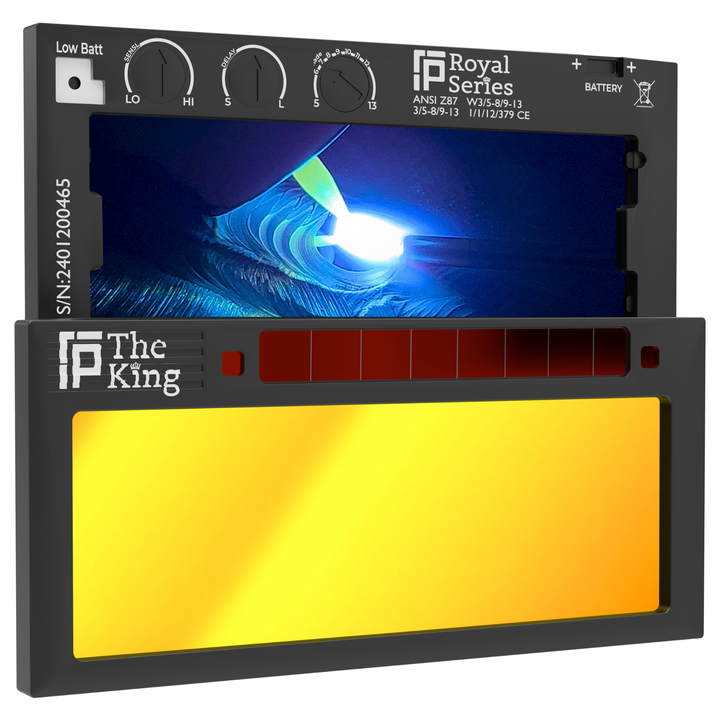
You should check that you have the correct safety equipment, including a welding helmet and welding lenses. A clear view is one of the most important requirements when welding. Using high-quality auto-darkening welding lenses or clear lenses helps you track the weld pool.
Technical Note (for Critical Joints)
For more demanding applications, pay attention to:
-
Joint design (e.g., groove geometry, root gaps)
-
Preheat and interpass temperature (especially for thicker sections)
-
Exact gas mix (e.g., argon vs argon-helium blends)
These details don't change the basic steps, but they help you dial in the best penetration and avoid cracking or distortion.
Welding Technique
Your welding technique affects the success and quality of the weld, so keep your technique steady by:
-
Holding a stable weld pool
-
Maintaining a consistent arc length (roughly equal to the electrode diameter)
-
Using a controlled, steady travel speed to ensure proper penetration and weld bead profile
-
Maintaining a proper travel angle (slightly backward/drag)
-
Controlling heat input to avoid burn-through
-
Keeping shielding gas flowing over the weld
Titanium requires constant coverage until the weld cools below about 400 °C to prevent embrittlement.
Post-Weld Inspection
Inspect your work right after welding. Some of the things you should look for are:
-
Cracks, undercut, excessive spatter, and porosity
-
Surface discontinuities
-
Bead consistency
-
Proper fusion and weld size/profile
You can use weld gauges for measuring leg length and throat thickness. A visual inspection alone can't fully confirm strength under stress, but it's a primary first-pass check for obvious defects.

Common Mistakes Welders Make and How To Avoid Them
Mistakes when welding with brass and titanium don't just affect their appearance. They lead to weak joints, wasted material, safety risks, and significant, often hidden, structural and environmental failures. Most issues come down to heat control, cleanliness, time spent (rushing), and visibility.
Brass Welding Mistakes
Brass reacts quickly to heat, and even small errors can cause major defects. Here are some of the biggest mistakes welders make when working with brass:
-
Overheating the metal: Excess heat burns off zinc, which creates porosity and weak welds. Keep the heat input controlled and move consistently.
-
Ignoring fumes: Zinc fumes are toxic and hazardous. Poor ventilation exposes you to health risks, so always work in a well-ventilated space or use fume extraction.
-
Using the wrong filler wire: Not all filler metals work well with brass. Silicon bronze rods often provide better flow and stronger joints.
-
Rushing the weld: Fast passes can trap gas, leading to voids or poor fusion. Take your time and watch the weld pool closely.
Titanium Welding Mistakes
Titanium punishes mistakes faster than most metals. Plus, cleanliness and shielding are non-negotiable with this metal. When welding with titanium, keep an eye out for these mistakes:
-
Inadequate shielding gas coverage: Even slight exposure to air can ruin the weld. Keep argon flowing before, during, and after the weld.
-
Welding on a dirty surface: Oils, dust, dirt, rust, grease, or fingerprints introduce contamination.
-
Stopping shielding gas too early: Titanium stays reactive as it cools. Keep shielding gas flowing until the weld cools to under 400 °C.
-
Poor torch angle and movement: Inconsistent torch control leads to uneven welds. Maintain a steady hand and consistent travel speed.
General Welding Mistakes
Some problems apply to both metals and need to be considered to avoid weld issues. These mistakes include:
-
Choosing the wrong welding process: Not every method works for all materials. TIG welding offers better control for both brass and titanium.
-
Ignoring the heat-affected zone (HAZ): Excess heat weakens the surrounding material. Control your arc and avoid overheating nearby areas.
-
Working with poor visibility: If you can't see the weld pool clearly, mistakes follow. Using quality welding lenses helps you track every movement. Adding a clear lens helps you maintain the integrity of your welding lens for longer by protecting it from scratches and marks that can affect visibility.
-
Skipping inspection: Many welders move on too quickly. Always check for cracks, porosity, undercut, and uneven bead consistency before finishing.
When Precision Matters
In high-risk or code-compliant work (such as aerospace or marine work), you should follow a written procedure that includes:
-
Joint design
-
Preheat
-
Interpass temperature limits
-
Certified filler-metal specs
The general mistakes and tips above still apply, but your process must be more tightly controlled and documented.

Tools And Equipment That Improve Weld Quality
The results you achieve depend on more than the technique you use. Equipment plays a big role in the success of your weld. Below are the non-negotiable equipment items every welder needs.
Welding Helmets
A clear-view helmet that fits tight spaces and balances well on your head helps you see the weld pool more accurately and reduces fatigue. Helmets with fast-darkening lenses also reduce eye strain on long jobs and help you avoid mistakes.
Our welding helmets use a fire-resistant fiberglass construction, which is durable and lightweight. They include a metal retainer in the flip-up to hold the lens firmly, and they accept a wide range of standard lens thicknesses (though they don't currently support cheater lenses). They're also compatible with hardhat adaptors for industrial-style use.
You can check out this guide to the best welding helmets for more insight.
Welding Lenses
A strong lens helps you track every movement while you're welding. Our high-quality welding lenses darken quickly and remain clear during long jobs, preventing mistakes and rework.
Our lenses are also available in several shades (including shades 9 to 12, Deep Blue/Purple, Gold/Light Blue, and Silver), so you can choose the one that best suits your work. Use this welding lens color chart to find the best lens color for your needs.
Protective Clear Lenses
Clear lenses protect your main lens from sparks and debris. Using clear lenses protects your eyes, improves your weld quality, protects your welding lens, and maintains good visibility. Our clear lenses are available in bulk packs, from 5 to 100 units.

Frequently Asked Questions
Is Brass Harder To Weld Than Steel?
Yes, welding brass presents more challenges than welding steel. The zinc content in brass can cause fumes and weak spots when overheated. Steel handles heat more predictably and has a higher melting range of 1,370 to 1,540 °C. Steel is more durable than brass and can be used for applications that require higher heat resistance.
Can You MIG Weld Titanium?
You can, but it's not the best option. MIG welding increases the chance of contamination, so it's not recommended for structural or thin-gauge work. MIG often produces excessive heat and spatter and has a higher potential for embrittlement.
The TIG welding process offers better control and cleaner results. Titanium also requires pure argon shielding on both the weld and the underside, making TIG superior.
Why Does Titanium Crack During Welding?
Titanium cracks when it reacts with the gases in the air (oxygen, nitrogen, and hydrogen), making the weld brittle. However, proper shielding during and after the welding process (until the weld cools) prevents this issue.
Do You Need Shielding Gas For Brass?
Yes. Shielding gas helps improve weld quality. While it's not as critical as with titanium, it still reduces oxidation and defects, and helps manage toxic zinc fumes.
Is Brazing Better Than Welding Brass?
In many cases, yes. Brazing avoids melting the base metal, which helps prevent zinc loss and produces cleaner joints.
Brazing is usually better when:
-
You want clean, leak‑tight joints on thin brass pipes, fittings, valves, or mixed‑metal assemblies.
-
You're more concerned about distortion and appearance (or ease of repair) than ultimate tensile strength.
If you're unsure about whether you should be using brazing, you can read more about what brazing is.
Conclusion
You can weld brass and titanium, but each metal demands a different approach. Clear visibility, steady control, full understanding of the process, and reliable gear make a difference. The right setup helps you avoid mistakes and produce consistent welds.
Brass requires careful heat control and attention to zinc loss. Titanium demands a clean setup and full shielding. Your results depend on preparation, technique, skill, and equipment.
So, while you can weld brass and titanium, it's important to look at whether they're the best metals for the job. And if they are, there's nothing to be afraid of, with the right preparation.
Reference:
-
Hornberger, E. (n.d.). THE PRACTICAL REFERENCE GUIDE for WELDING TITANIUM. In N.W. LeJeune Road (p. 33126). American Welding Society.