


Brazing is a process in which metal parts are joined using a filler metal that melts at a lower temperature than the base metals. Unlike welding, which melts and fuses the base materials, brazing melts only the filler metal, which flows into the joint through capillary action.
The process uses heat above 840°F (450°C) but stays cool enough that your base metals don't melt. This makes brazing perfect for joining different types of metals, working with thin pieces, and creating tight, leak-proof seals without warping or damaging materials.
How the Brazing Process Works
Brazing relies on capillary action. When you heat base metal surfaces to brazing temperature and add filler material, the molten filler metal is drawn into the gap between parts and can even flow upward against gravity. This happens because the liquid filler is more attracted to clean metal surfaces than to itself.
The gap between parts should be very small, typically 0.001" to 0.005". Capillary flow will be prevented if the gap is too wide, and the flux will get trapped if it’s too narrow.
Clean surfaces determine the joint quality. Contamination from oil, rust, oxides, or even fingerprints prevents wetting, which is the filler metal's ability to spread and bond to base metals. Therefore, you need to keep surfaces clean. Chemical cleaners work best for removing oils, while abrasive cleaning removes rust and oxides.
Heating can also cause new oxidation, but flux prevents it by dissolving light oxides on the metal surface. Each combination of filler metal and base material needs its own type of flux.
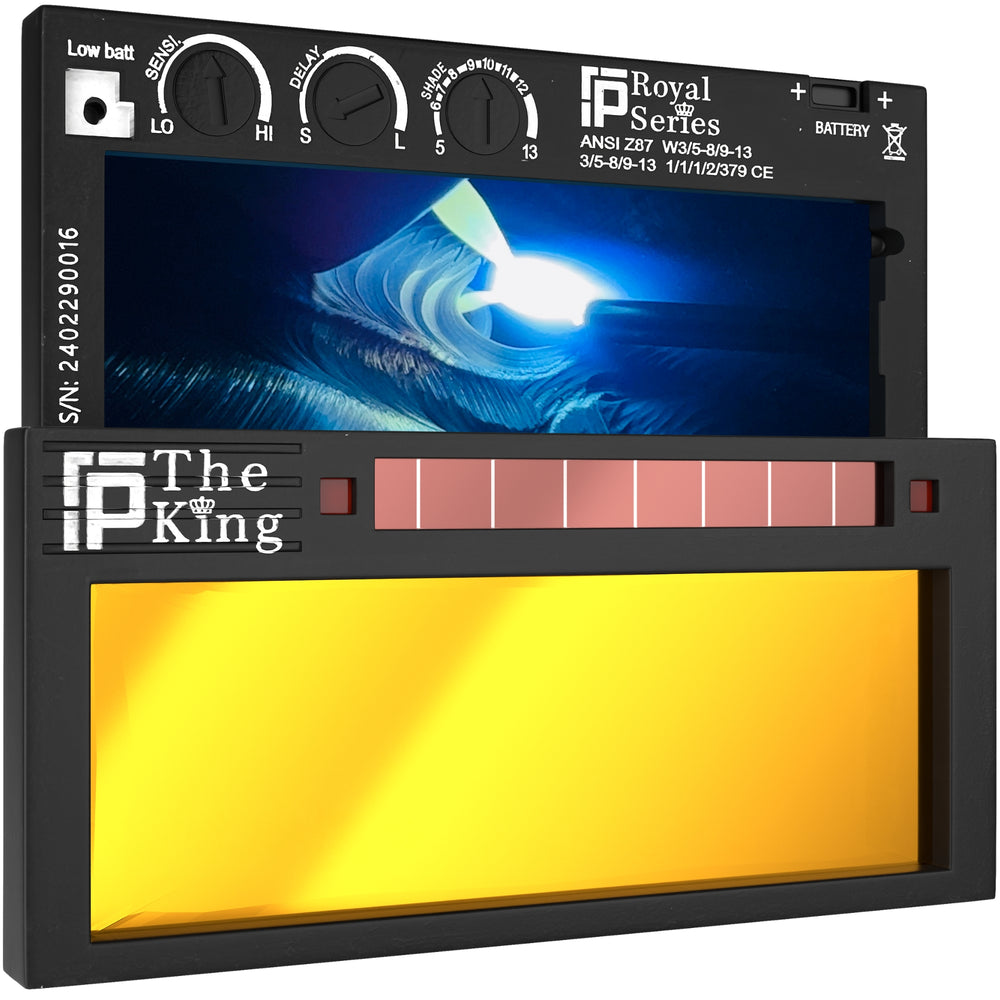
Quality auto-darkening welding lenses help you monitor the brazing process and watch for proper filler metal flow and color changes that indicate correct temperature.
The Difference Between Brazing and Welding

These are some notable differences between brazing and welding.
|
Aspect |
Welding |
Brazing |
|
What Melts |
Melts the base metals themselves. Creates a weld pool where the base material melts and fuses together. |
Never melts the metals being joined. Base metals stay solid while only the filler metal melts and flows. |
|
Final Joint |
When cooled, the base metals have literally become one piece. |
Base metals remain separate, bonded by the filler metal. |
|
Temperature |
High enough to melt the base metals. |
Lower than the melting points of base metals, often by several hundred degrees. |
|
Heat Distortion |
Pieces warp from intense localized heat. |
Pieces heat more uniformly and distort less. This is critical when working with thin materials or precision assemblies. |
|
Joining Different Metals |
Requires similar metals with compatible melting points. |
Can join many dissimilar combinations, such as copper to steel and tungsten carbide to steel; specialized fillers can even join aluminum to stainless steel. The filler metal acts as a metallurgical bridge between incompatible materials. |
|
Joint Strength |
Creates joints as strong as the base material. |
Generally weaker than welded joints for heavy structural loads, since strength depends on the filler and joint design. However, well-designed lap or socket joints can reach strengths comparable to, and in some cases approaching or exceeding, the base metal in specific applications. |
At the end of the day, the key distinction is what melts during the process. Welding melts the base metals themselves. Whether you’re doing arc, TIG, or gas welding, a weld pool forms where the base material melts and fuses. Brazing, on the other hand, keeps the base metals solid and relies on molten filler metal to create the bond. This fundamental difference determines which process or welding tools work best for each application.
Brazing vs. Soldering

The diving line between brazing and soldering is 840°F (450°C). Below this temperature, you're soldering. Above it, you're brazing.
Soldering creates weaker bonds that work well for electronic components and low-pressure applications. Lower temperatures mean the filler bonds less strongly to base metals.
Brazing's higher temperatures allow the filler metal to bond with the base metal at a microscopic level, creating much stronger bonds. Brazed joints can handle high stress, vibration, and heat that would destroy soldered connections. For example, HVAC systems use brazed joints for refrigerant lines because they withstand the pressure, vibration, and temperature changes that soldering can't handle.
Braze Welding vs. Brazing
Braze welding and brazing are often confused, but they work differently. In brazing, capillary action pulls the filler metal into tight joints. However, in braze welding, the filler metal is deposited into grooves or fillet joints without relying on capillary action. It’s similar to laying down a weld bead.
Both processes use filler metals with lower melting points than the base material. However, instead of flowing between closely fitted parts, braze welding applies the molten filler directly into prepared joints. This technique works well for repairing cast iron and situations where tight joint clearances aren't practical.
The key difference: brazing relies on capillary flow in tight gaps (0.001"-0.005"), while braze welding deposits filler into wider grooves without needing capillary action.
Understanding Filler Metal and Brazing Alloys
Brazing filler metal determines joint strength, corrosion resistance, and service temperature limits. Common types include:
- Silver Brazing Alloys: Made from silver, copper, zinc, and sometimes cadmium or tin. Silver brazing creates strong, flexible joints with good corrosion resistance and works across a wide temperature range. More silver content means that the alloy melts at a lower temperature but costs more.
- Copper-Phosphorus Alloys: Used for joining copper and copper alloys. Phosphorus acts as a built-in flux when brazing copper, so no separate flux is needed. It’s commonly found in plumbing fixtures and HVAC systems.
- Nickel-Based Alloys: Designed for high-temperature applications where joints must withstand high stresses at high temperatures. It’s used in aerospace and power generation equipment.
- Aluminum Brazing Alloys: Specially made for brazing aluminum. These require a special flux or a controlled atmosphere to prevent oxidation during processing.
- Silicon Bronze: Used to join steel and cast iron. Creates strong, corrosion-resistant joints with good mechanical properties.
The right filler material must melt below the base metals' melting points, bond well to both base metals, and provide sufficient strength for the job. Most common brazing processes occur between about 900°F and 1650°F (480°C to 900°C), though some specialized high-temperature nickel or other alloys can be brazed up to around 2000°F (≈1100°C).
Brazing Methods and Heating Techniques
Different heating methods work best for different situations, whether you’re making one part or thousands, or working with small or large pieces, or joining specific material combinations. The heating method you choose affects how fast the process works, joint quality, and whether it can be automated.
Torch Brazing
Torch brazing uses a welding torch with combusted fuel gas to manually heat the joint area. The operator controls the heating and manually inserts the filler rod, feeding it in as the base metals reach the required temperature.
It is the most common method for small production volumes, repair work, and field applications. It requires minimal equipment and works well when the part can't be moved to a shop.
Results depend on operator skill. Overheating damages base metals. Underheating means incomplete flow and weak joints. Therefore, heat control must be handled with utmost care. Using top-notch welding lenses can be handy, as they help operators see the actual puddle color during torch brazing, making it easier to judge when base metals reach the proper temperature.
Furnace Brazing
Furnace brazing heats the entire assembly in a controlled-atmosphere furnace, allowing multiple joints to be brazed simultaneously. This is the dominant method in industrial brazing because it allows complex assemblies with dozens of joints to be brazed in a single cycle. The uniform heating produces consistent results.
Vacuum furnace brazing removes all air, preventing oxidation without flux, producing extremely clean joints. Aerospace components often use this method.
The downsides include high equipment costs and longer heating and cooling times. Parts require special design features or fixtures to remain aligned during processing.
Dip Brazing
Dip brazing submerges assembled parts in molten salt or molten metal, heating them rapidly and evenly.
Salt bath dip brazing works especially well for aluminum because it excludes air, preventing the formation of aluminum oxide. Metal bath dip brazing uses the filler metal itself as the heating medium.
Dip brazing offers fast heating and cooling with minimal warping, but it requires specialized equipment.
Other Heating Techniques
Induction Brazing uses electromagnetic fields to heat joints rapidly and precisely. It works well for high-volume production of similar parts and provides excellent control over which areas get heated.
Resistance Brazing passes electrical current through the joint to generate heat. It suits automated production lines and provides localized heating.
These heating techniques enable brazing to adapt to a range of production requirements, from single repairs to mass manufacturing.
Brazing Applications Across Industries
Brazing is used throughout modern manufacturing because it joins different materials, creates leak-proof seals, produces clean joints, and handles components that welding would damage. These are ways in which brazing can be applied across industries:
Automotive
For making fuel lines, radiator coils, diesel engine circulation tubes, and engine parts that need corrosion resistance. Brazed joints withstand vibration, temperature changes, and exposure to corrosive fluids such as coolant and fuel. Automotive heat exchangers rely heavily on brazed construction because the joints must contain pressurized fluids while resisting road salt and high engine temperatures.
HVAC and Refrigeration
Joining copper pipes and components where leak-proof seals are critical. Brazed joints in refrigerators and air conditioners provide reliable seals that retain refrigerant under pressure during extreme temperature changes. A single leak means lost efficiency and environmental problems. Industrial refrigeration systems in cold storage facilities use brazed joints extensively because they survive constant thermal stress better than mechanical connections.
Aerospace
Jet turbine blades and satellite components need strong joints with minimal weight. Brazing is valuable for turbine blades that combine multiple metal alloys optimized for different temperature zones. Honeycomb structures in aircraft use brazed joints to bond face sheets to core materials, creating lightweight but strong panels.
Tool Manufacturing
Excellent at attaching hard-metal tips to saw blades and cutting tools. Brazing bonds tungsten carbide and diamond to steel tool bodies, creating joints that withstand high stress, impact, and cutting heat. Band saw blades, hole saws, and drill bits all use brazed carbide tips.
Understanding different weld types and techniques helps in recognizing when brazing is a better choice than fusion welding, particularly with dissimilar materials and thin sections, where brazed connections hold up where welded ones would fail.
Plumbing
Creating leak-proof joints in water supply systems and process piping. Brazed joints handle pressure and corrosion better than threaded connections while providing smooth interior surfaces that don't trap debris or create turbulence. Industrial process piping for chemicals and pharmaceuticals uses brazed stainless steel joints because they resist harsh chemicals and are easy to clean.
Electronics
It’s useful in joining delicate components where welding temperatures would cause damage.
- Electronic devices with sensitive circuits benefit from brazing's lower heat.
- Vacuum tubes, microwave components, and power electronics all use brazed assemblies.
- Medical devices often use brazed joints in surgical instruments because they resist corrosion and contamination.
Brazing is also used to manufacture compressors for industrial air systems, mining tools where carbide tips are brazed to steel shanks, jewelry where different metals are permanently joined, and musical instruments such as saxophones and trumpets, where the bell is brazed to the body.
Why Choose Brazing Over Other Methods
When it comes to joining metals, brazing offers some compelling advantages over traditional welding methods. Here are some reasons why this technique stands out and when you might want to use it.
Joining Dissimilar Metals
Brazing reliably joins copper to steel, aluminum to stainless steel, and metals to non-metals like carbides and ceramics. The filler metal acts as a metallurgical bridge between materials with incompatible melting points. Welding can't handle most of these combinations.
Less Thermal Distortion
Uniform heating produces less warping than welding's concentrated heat. Sheet metal fabrications stay flat. Precision instruments maintain their tolerances. This matters when working with thin materials or assemblies that can't be straightened after joining.
Clean Joints
Brazed joints often need no post-process finishing. Most welding processes require grinding, filing, and cleaning after completion. Brazing produces smooth joints you can leave as-is.
Easy Automation
Brazing adapts to mass production better than welding because process parameters are less sensitive to variation. The broad heat application and straightforward filler metal positioning produce consistent quality across hundreds of parts.
Leak-Proof Seals
Filler metal completely fills joint gaps, creating strong seals that hold under pressure and vibration. No voids or channels where leaks can develop.
Lower Energy Costs
Reduced operating temperatures mean lower energy consumption than welding processes that must melt base metals. This becomes significant in high-volume production.
Limitations and Challenges
Lower Strength: Brazed joints generally can't match the strength of welded joints because strength comes from the softer filler metal.
Temperature Sensitivity: Joints can fail if service temperatures approach the brazing range used during fabrication.
Visual Appearance: Joint color often differs from the base metal, and the filler metal color stands out against the base material.
Surface Preparation: Exceptionally clean surfaces are required. Contamination prevents wetting and creates weak bonds.
Design Constraints: Brazing needs tight clearances for capillary action. Proper joint design requires careful consideration and often involves machined surfaces.
Getting Quality Results
If you want to practice brazing and get quality results, keep these key factors in mind:
Cleanliness: Use chemical cleaning for oils, abrasive cleaning for oxides. Clean parts immediately before brazing as fingerprints can cause wetting problems.
Flux Application: Apply the right flux evenly. Too few leaves leave unprotected areas. Too much creates residue.
Joint Clearance: Maintain 0.001" to 0.005" gaps at brazing temperature. Account for thermal expansion in room-temperature design.
Proper Temperature: Base metals require uniform heating to ensure the liquid filler metal flows properly. Underheating causes weak joints. Overheating damages base metals.
Joint Design: Maximize bonding surface area. Use lap joints over butt joints because they provide more bonding area. Design self-jigging features for alignment.
Proper welding equipment storage between brazing operations keeps filler metals dry and prevents flux contamination.
Conclusion
Brazing fills a critical niche between welding's high strength and mechanical fasteners' convenience. Its ability to join dissimilar metals, minimize distortion, and create leak-tight seals makes it essential across industries from aerospace to plumbing.
Success requires mastering the fundamentals: clean surfaces, proper clearances, accurate temperature control, and the right filler metal. Whether torch brazing a single repair or running automated furnace brazing for production, these core principles remain constant.
As manufacturing demands lighter weight, better corrosion resistance, and the joining of advanced materials, brazing continues to handle challenges that other methods can't solve.