


Porosity in welding is hands down one of the most destructive weld defects you’ll encounter in inspection failures and costly repairs. It sabotages your weld’s integrity from the inside out. Welding porosity comes from trapped gas bubbles in scattered, linear, uniform, wormhole, and crater forms. These gas pockets weaken welds and can lead to catastrophic failure if ignored. Excessive porosity gets rejected under American Welding Society (AWS) and American Society of Mechanical Engineers (ASME) codes for good reason.
Welding is the process of joining materials, and in this context, porosity in welding refers to the presence of gas pockets or voids within the weld metal that compromise weld quality and strength. Porosity can occur in various welding processes, including MIG, TIG, stick, and flux-cored welding.
This guide breaks down exactly what porosity in welding is, how it destroys mechanical strength, accelerates corrosion, and costs you serious money in repairs. We’ll also show you how to prevent porosity and deliver welds that actually work.
What Is Porosity in Welding?
Welding porosity is gas entrapment that happens during the welding process – and it's completely preventable when you know what you're doing. Your welding arc generates intense heat, and the molten metal in your weld pool rapidly absorbs gases. Porosity occurs when gases can't escape before the metal hardens.
Definition of Gas Entrapment in Molten Metal
Here's what's happening: your molten weld pool loves soaking up gases. But as the temperature drops, the metal's ability to retain those gases drops rapidly. When rapid solidification hits, those bubbles get "frozen" in place, creating holes and cavities. Porosity in welding is evidence that the gas couldn't reach the surface of your weld puddle in time.
Physical Characteristics of Porosity Defects
These defects appear as small holes on the weld surface (surface porosity) or as subsurface porosity deep within the joint. Either way, they’re voids that represent zero fusion and broken continuity in your welded joint, impacting overall weld integrity.
Types of Porosity in Welding
These are some of the types of porosity in welding you might see:
Scattered and Distributed Porosity
Distributed porosity means gas pockets spread throughout your weld bead. It usually comes from minor gas issues or a slightly off welding technique. Don't let those small individual holes fool you; they add up and weaken your entire weld zone.
Cluster Porosity in Concentrated Zones
Cluster porosity hits you with groups of elongated pores or spherical voids all bunched up in one spot. This screams sudden shielding gas disruption – maybe a draft blew away your protection, or you hit a contaminated section of base metal.
Linear and Wormhole Porosity
Wormhole porosity (also called piping porosity) creates large, tunnel-like cavities that’ll ruin your day. It happens when surface contamination or moisture, such as oil, rust, paint, or galvanized coatings, releases gases during welding. These released gases can become trapped in the weld pool as it moves, leading to serious welding porosity that demands full repair – no shortcuts.
Crater Porosity at the Weld Termination
Crater porosity happens at the end of a weld bead when you kill your welding arc too fast. The shrinking molten pool sucks in atmospheric gases while cooling, leaving a hollow cavity that becomes a crack starter.

Methods to Detect Surface and Hidden Porosity
Surface Pits and Pinholes
Start with a visual check of your weld surface. Surface porosity appears as visible holes resembling sponges or pinpricks. But visual checks miss subsurface porosity hiding inside your weld metal.
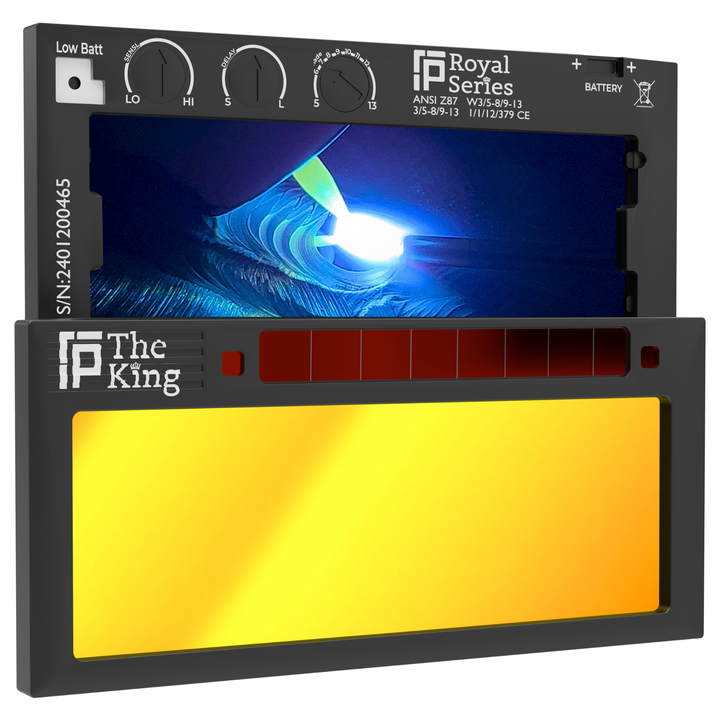
Clear visibility during inspection is essential, and high-quality welding lenses help spot surface porosity early, before defects become repair work. Many welders prefer gold welding lenses here because they reduce glare and make pinholes stand out more quickly during visual checks.
Choosing the right lens tint plays a big role in inspection accuracy, and this welding lens color guide breaks down how different lens colors affect visibility during weld checks.
Internal Analysis via Radiographic and Ultrasonic Testing
For hidden defects, inspectors use ultrasonic testing or X-rays. Ultrasonic testing sends high-frequency sound waves to map your weld's interior, pinpointing exactly where gas entrapment occurred. These methods are non-negotiable for critical structures where weld quality matters.
Liquid Penetrant Tests for Microscopic Surface Breaches
When porosity in welding is too small for the naked eye, dye penetrant gets the job done. The dye seeps into tiny holes, making porosity defects glow against a developer – ensuring your weld area is actually clean.
What Causes Porosity in Welds?
Improper shielding gas selection and usage are common factors causing porosity in welds, as they can allow nitrogen to become trapped in the weld area.
These are some of the causes of porosity in welds:
Atmospheric Contamination from Poor Shielding Coverage
Atmospheric contamination is a major porosity culprit. When shielding gas coverage gets disrupted by wind or excessive flow, creating turbulence, atmospheric gases like nitrogen and oxygen crash your molten pool party. Proper shielding gas usage displaces air around your welding arc – it's that simple.
Surface Impurities and Hydrocarbon Residue
Surface contamination (oil, grease, rust, paint) releases gases when heated. These become trapped gas as your weld puddle moves over dirty metal. Improper welding techniques can also introduce contaminants or allow gas entrapment, further increasing the risk of porosity. Poor joint preparation blocks access to clean material, preventing quality welds.
Hydrogen Generation from Moist Consumables
Moisture in SMAW electrodes, flux, or filler materials introduces hydrogen into your weld pool. This causes hydrogen-induced cracking and welding porosity. Your filler wire needs to stay bone-dry to avoid porosity problems.
Storing electrodes in a proper welding rod oven reduces moisture pickup and lowers the risk of hydrogen-related porosity in structural joints.
Excessive Heat Input and Arc Turbulence
Excessive heat destabilizes your arc and increases gas absorption. Excessive welding speed prevents gases from escaping before the metal solidifies, while too much arc time increases oxygen infiltration into your molten pool.
Chemical Reactions with Zinc Coatings
Welding galvanized steel without proper pre-weld treatment creates major porosity issues. Zinc coatings vaporize at high temperatures, and those vapors become trapped gas, showing up as wormhole porosity.
4 Consequences of Porosity on Structural Strength
Reduction in Load-Bearing Effective Cross-Sectional Area
Porosity in welding significantly weakens the weld by reducing mechanical strength. It reduces the effective cross-sectional area of weld metal – meaning less solid material to carry loads.
Creation of Stress Concentrators and Crack Initiation Points
Pores act as stress concentrators. These gas pockets create internal "notches" where stress builds up, initiating and spreading cracks. This is how unexpected weld failures happen.
Decrease in Fatigue Resistance Under Dynamic Loads
Even small porosity amounts compromise structural durability. Under repeated stress (fatigue), porous welds fail much faster than solid ones, as porosity defects exploit constant movement to grow into fractures.
Development of Leak Paths and Accelerated Corrosion
Welding porosity creates pathways for moisture and corrosive agents to penetrate your welded joint. It accelerates corrosion and loss of leak-tightness in pressure vessels. Over time, it means further degradation and safety risks.
How to Fix Porosity
Mechanical Removal of the Defective Weld Zone
Once you find porosity in welding, it's got to go. Use a grinder or wire brushes to excavate the weld zone until all visible holes and hidden defects are gone. You can't just weld over welding porosity – that's asking for failure.
Complete Decontamination of the Repair Groove
After grinding, use steel wool or solvents to ensure the area is debris-free. Surface contamination left in the groove will make your repair fail, too.
System Audit of Gas and Electrical Parameters
Before re-welding, check your welding equipment. Auto-darkening lenses like The Prince Silver help monitor arc stability and gas coverage without constant hood adjustments during parameter checks. Inspect gas lines for leaks and verify that your gas supplier provided the correct mixture. Ensure gas flow and flow rate match your welding application.
Execution of the Structural Repair Pass
Apply proper shielding gas usage and correct welding techniques. Keep your travel speed reasonable – not excessive welding speed – allowing your molten weld pool to outgas properly before it freezes.
5 Ways to Prevent Porosity in Every Weld
Strict Pre-Weld Treatment and Metal Preparation
Clean all metal surfaces thoroughly. Thorough cleaning and preparation are essential for achieving a clean weld and preventing defects. Use wire brushes to remove mill scale, rust, and paint. Pre-weld treatment is the most effective way to prevent hydrocarbon-caused porosity.
Optimization of Shielding Gas Flow and Coverage
Adjust the flow rate to avoid excessive flow turbulence while ensuring enough gas flow to block atmospheric air. Follow the manufacturer's recommended shielding gas settings for your specific welding parameters.
Climate Controlled Storage for Filler Materials
Keep SMAW electrodes in a rod oven and store welding wire in dry, covered areas. Moisture is the biggest enemy of weld quality. Keeping filler wire dry is essential to prevent porosity in welding.
Use of High Quality Welding Products and Safety Gear
Invest in high-quality weld components, such as gas lenses and clean diffusers. Investing in training and proper techniques is essential for achieving a high-quality weld that resists porosity and ensures long-term durability. Regularly inspect welding equipment and hoses to prevent air entrainment into gas lines. High-quality welding products ensure stable welding arcs.
Installation of Environmental Windbreaks
Drafts and wind disrupt shielding gas coverage. Use barriers or enclosures to maintain stable environments. This prevents atmospheric gases from getting pulled into your molten pool.
Frequently Answered Questions
How Much Porosity Is Acceptable Under Aws Codes?
Most codes, such as AWS D1.1, impose strict limits on porosity size and frequency in welds before parts are rejected.
Does Aluminum Have A Higher Risk of Porosity Than Steel?
Yes, aluminum has much higher gas absorption rates, particularly hydrogen, making cleanliness absolutely vital.
Why Does Porosity Appear On Visually Clean Metal?
It usually points to gas issues, such as gas line leaks or contaminated gas supplier cylinders.
Can I Detect Subsurface Porosity Without X-Rays?
Ultrasonic testing is the most common field-ready alternative to X-rays for finding hidden defects.
Is Mig or Tig More Susceptible to Porosity?
MIG is often more susceptible due to higher welding parameters and potential air entrainment in the gun.
How Does Humidity Affect Weld Quality?
High humidity increases air moisture, which can contaminate shielding gas or welding wire.
What Is A "Cigar" Flow Test?
It's a manual check of gas flow at the nozzle to ensure proper shielding gas usage is occurring.
Should I Repair or Replace A Porous Weld?
If the effective cross-sectional area is heavily compromised throughout the joint, complete replacement is safer than patch repair.
Conclusion
If you've been asking 'what is porosity in welding' – now you know. It's a serious threat to the safety and longevity of any structure. By focusing on weld quality, operators can avoid the trapped gas that leads to porosity defects. Remember: surface contamination, sloppy welding techniques, and poor shielding gas management are your main enemies. To prevent porosity in welding, prioritize pre-weld treatment, maintain your welding equipment, and always keep filler materials dry. High-quality welds aren't just about looks – they're requirements for structural integrity and preventing weld failure.