


So you’ve bought your first welding machine, or maybe you are leveling up from MIG to TIG. You hear someone mention arc welding and they expect you to know what they’re talking about, but you’re lost. That’s okay – we’ve got you covered.
Arc welding is not just one process. Arc welding refers to a whole family of welding processes that use an electric arc to join pieces of metal. Stick welding, TIG welding, and MIG welding are all forms of arc welding.
This guide explains exactly what arc welding is, how it works, and everything else you need to know.
What Exactly is Arc Welding?
Arc welding is where there’s an electric arc between the base material (the piece of material you’re trying to weld) and an electrode (the welding torch or stick you hold in your hands). The heat from the arc is so intense that it melts the edges of both pieces of metal, turning them into a liquid pool (a weld puddle). As the pool cools down, the liquid from each piece solidifies, and the metals join together; they form what’s known as a solid metallurgical bond.
Some processes (MIG or Stick) used in arc welding involve a consumable electrode, which is where the heat melts the electrode itself. The melting electrode drips right into the joint and acts as the "filler metal" to plug the gap between the two pieces you’re joining. When it comes to TIG welding, you’ll use a non-consumable electrode and therefore a separate filler rod.
How Is the Welding Arc Created?
Welding machines are also known as power supplies. They take electrical power from the wall and convert it into a current with low voltage and high amperage. The welding machine creates the arc by applying voltage across the electrode and the piece you’re working with. This means that when you touch the electrode to the metal, you create an electrical current across a small air gap between the two pieces.
An electric current flows between the electrode and workpiece, and it’s the resistance to the air that creates the electric arc. This electric current heats up both the workpiece and the electrode until they melt enough for you to fuse them together.
Welding machines can use an AC (alternating current) power supply or a DC (direct current) power supply. The temperature of the arc varies between welding processes; it goes very high (anywhere from 6,000°F to 10,000°F), which is what you need to melt steel, aluminum, or whatever material you are working with to form a bond.
The History of Arc Welding
The first attempts at arc welding are thought to have been made in the 1880s when inventors of carbon electrode arc welding machines applied for patents. A few years later, inventors came up with the idea of the metal electrode. This innovation led to various developments over time, which resulted in all the welding technologies we have today.

How Does Arc Welding Work?
Arc welding processes when you establish an electric arc. You do this by moving the electrode to the vicinity of the base metal you want to weld to initiate the arc. You may need to tap the electrode and base metal together, or just hover them close together to create the arc.
The heat from the arc is intense, and it immediately starts to melt base metal, which causes a depression or small pool of molten metal to form. This pool is often termed a molten pool or weld pool.
Once the electrode and base metal cool down and become solid, they create a strong bond, becoming one strong and continuous piece. The type of electrode you work with, as well as the amperage, will ensure that they become and remain bonded.
Shielding Gases
Molten metal oxidizes very easily when it comes into contact with air containing oxygen and nitrogen. This can cause flaws and defects within the weld, which makes it weak and brittle. However, you can use something called a “shielding gas,” which will protect the weld from atmospheric contaminants and stop the air from ruining the weld. Shielding gas is used with MIG welding in particular. It comes out of a torch nozzle, and it forms a protective gas barrier around the weld that pushes the air away until the weld has had the chance to cool down.
The most common shielding gases used in arc welding are argon (an inert gas) and carbon dioxide (an active gas).
When it comes to stick welding (Shielded metal arc welding), there isn’t a gas tank like there is with MIG welding. In this case, the welding rod has a specific coating called “flux,” which turns into a cloud of smoke that covers the weld once it’s been heated up. Because of this, stick welding is best done outdoors because the wind won’t blow the shield away. However, it can be done both indoors and outdoors.
The Main Types of Arc Welding You'll Run Into
As mentioned previously, there’s not just one type of arc welding process. In fact, there are quite a number of processes that all fall under the arc welding family. Some processes are more commonly used than others, but each has its own advantages. A professionally finished weld may look solid and simple; however, if you want to achieve that perfect bond, you need to choose the right process for the job.
Stick Welding: The Old Favorite
Shielded metal arc welding is also known as manual metal arc welding, or flux shielded arc welding. With this process, you use an electrode that’s coated in welding flux, and strike it against the base metal to ignite the arc and start a bond.
The electrode rod works hand-in-hand with its flux coating. As the arc burns them, the flux simultaneously generates a protective gas shield around the arc and leaves behind a layer of solid slag that blankets the cooling molten metal. This protects it from the atmosphere. This is a very popular entry-level choice for welding because of its simplicity.
MIG Welding: Quick and Accurate
MIG welding, also known as gas metal arc welding, uses an automatically fed wire as its consumable electrode or MIG wire as part of its process. You pull the trigger on the MIG gun, and this rolls out the wire and activates the electrical current to strike the arc. At the same time, this releases the shielding gas that protects the weld from the air. This shielding gas doesn’t produce smoke or slag, which means you end up with a much smoother weld compared to other processes. This makes MIG welding a great starting point.
TIG Welding: Precise Work for Sensitive Objects
TIG welding is also known as Gas tungsten arc welding. This process uses a non-consumable electrode that does not melt into the workpiece. Instead, you add filler material to it.
In terms of shielding gas, TIG welding uses 100% pure argon, as this protects the delicate tungsten needle from burning up.
Because you have better control of the penetration, this type of welding is perfect for producing clean and accurate welds on various metals – particularly stainless steel and aluminum. That said, it can work with any metal if you’re skilled enough with the process.
Flux-Cored Welding: Built to Endure the Environment
Flux-cored arc welding also goes by FCAW. In most respects, flux-cored welding is very similar to MIG welding in that it uses a constantly fed consumable electrode. However, this type is much better suited for outdoor welding than MIG is.
The main difference between the two is the wiring. FCAW has a hollow wire packed with chemical flux inside its core, instead of a solid metal wire. The wire melts in the arc, and the internal flux vaporizes to create its own protective gas shield and protective slag layer. Since it creates its own shield, the wind cannot easily blow the protection away, which is what makes it durable for outdoor use.
Submerged Arc Welding
Submerged arc welding features an electrode that’s completely covered up so you can’t see the arc when it’s being created. The arc is covered in granulated flux, which means no air comes into contact with the molten pool. This creates an impressive quality of weld that would not be achievable by most other welding processes. Submerged arc welding is great for shipbuilding.
Plasma Arc Welding: A Step Up in Precision
Plasma arc welding, or PAW, is similar in a lot of ways to TIG welding, including its use of a non-consumable electrode. The difference comes from a constricting nozzle, which forces gas through a fine bore hole to create a tightly focused plasma jet. That concentrated arc delivers extreme heat to a very small area, which gives welders tighter control than standard TIG welding. Like TIG, you often need to add separate filler material by hand. PAW also works well on both ferrous and non-ferrous materials.
Whether a process falls under consumable electrode methods like MIG, stick, flux cored, and submerged arc welding, or non-consumable electrode methods like TIG and plasma arc welding, the shielding approach and electrode choice are what set these arc welding processes apart.
No matter which method you use, you need a lens that can handle the welding arc safely, which is exactly why it’s also important to invest in a good welding lens.
Where You'll See Arc Welding Put to Work
Arc welding processes, whether they run on consumable electrodes or a non-consumable tungsten electrode, are used whenever you need to join or repair metal.
- Construction Work: Crews tend to use stick welding and MIG welding when it comes to working on structural steel, framing, and general fabrication.
- Pipeline Welding: Since you can use stick welding and flux-cored arc welding well outdoors, they’re common choices for pipeline construction and repair.
-
Automotive Repair: Shops rely on MIG welding and TIG welding for frame repair, especially on non-ferrous materials like aluminum.
-
Shipbuilding Projects: Submerged arc welding handles thick hull plating well, since it produces high-quality welds with deep penetration.
Across every one of these industries, welders need a machine, an electrode, and welding helmets built to handle the heat an electric arc produces.
What Makes a Good Arc Welding Helmet
Once you know which arc welding processes you’ll be using most, the next thing you need to think about is protection. A good helmet has to protect you from intense heat, bright light, and the ultraviolet radiation an arc welding process throws off every time you strike an arc.
Optical Clarity: Your Eyes Will Thank You
Optical clarity determines how well you can see your work through the lens. Quality lenses meet recognized standards such as ANSI Z87.1 or EN379, both of which set minimum requirements for distortion and blurriness. All certified welding lenses must also block 100% of harmful UV and Infrared (IR) rays, even when the lens is completely clear.
A clear lens is also important when it comes to comfort, since a low optical clarity lens leads to fatigue and mistakes over a long shift. This is because your eyes are constantly straining to be able to focus.
Sensor Count and Reaction Time
Most auto-darkening welding helmets use two to four arc sensors to detect the welding arc the instant it strikes. If your helmet has a faster reaction time, this means the lens will darken before harmful light reaches your eyes, cutting down on the flash exposure that leads to eye strain and headaches.
Auto-Darkening or Passive: Which Fits How You Work
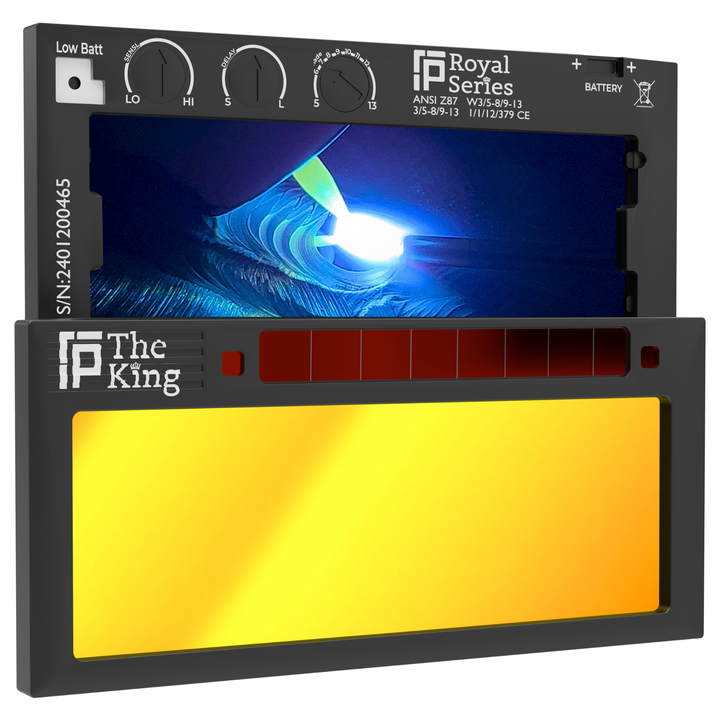
Auto-darkening helmets switch from a light state to a dark shade automatically once the arc strikes, letting you line up your joint without flipping anything. Passive helmets stay at one fixed shade, so you have to flip the hood down manually before striking an arc. Passive designs cost less and have fewer parts that can fail, but auto-darkening helmets save time and reduce neck strain.
Getting the Right Lens Shade for Your Work
Shade numbers tell you how dark a lens gets, and the right number depends on both your welding process and your amperage. Higher amperage will need a darker shade, since a lighter shade lets too much intense light and glare reach your eyes. A shade that’s too dark makes it hard to see the weld puddle clearly.
- Stick Welding Shade: Most stick welding needs a shade between 10 and 14, with higher amperage jobs needing a darker shade.
-
MIG Welding Shade: MIG welding typically runs from shade 10 to 13, depending on your amperage and material thickness.
-
TIG Welding Shade: TIG welding can range from shade 8 to 13, since lower amperage precision work often needs a lighter shade than heavier stick welding jobs.
If you need a closer breakdown of shade by amperage and welding current, this welding lens color guide covers it process by process.
Lens Tint is More Important Than You'd Think
The lens tint and coating affect more than the way your hood looks. Gold lenses reflect heat well and cut down on glare, which helps during high-amp stick welding or plasma arc welding. True color lenses, usually a light blue or gray tint, give you a clearer view of the weld pool, which matters most during precision welding like TIG welding on thin materials.
Specialized Hoods Built for Serious Welders
Pipeliner Hoods: Made for Tight Joints
Pipeliner hoods use a low-profile design that fits into tight spaces around pipe joints. Their smaller shell makes it easier to see your work at odd angles, which is important when you’re welding pipe in the field and need to see properly.
Pipeliner hoods are also sometimes called a sugar scoop. They earned the nickname "sugar scoop" because of their smooth, elongated fiberglass shape – it resembles an old-fashioned grocery store sugar scoop.
Frequently Asked Questions
What Is the Difference Between Arc Welding and MIG Welding?
MIG welding, or gas metal arc welding, is one specific type of arc welding, not a separate category. Arc welding is the broader term covering MIG, TIG, stick, flux cored, submerged, and plasma arc welding alike.
Is Arc Welding the Same as Stick Welding?
Stick welding, or shielded metal arc welding, is the most recognizable arc welding process, which is why people use the terms interchangeably. Arc welding also includes MIG, TIG, and several other welding methods.
What Shade Lens Do I Need for Stick Welding?
Stick welding generally calls for a shade somewhere between 10 and 14, depending on your amperage. Higher amperage stick welding needs a darker shade to protect your eyes properly.
Can One Helmet Work for MIG, TIG, and Stick Welding?
A variable shade auto darkening lens can usually cover MIG, TIG, and stick welding, since you can adjust the shade for each process. A fixed shade passive helmet cannot make that adjustment.
How Hot Does an Arc Welding Arc Get?
An arc welding arc reaches 6,000 to 10,000 degrees Fahrenheit, more than hot enough to melt base metal in seconds. The exact temperature depends on the process and the amperage being used.
Is Arc Welding Hard to Learn?
Stick welding is one of the hardest methods for a beginner welder to master. It needs the least equipment, but it has the hardest technique to master.
What Safety Gear Do I Need Besides a Helmet?
Welding gloves, flame resistant clothing, and proper ventilation matter just as much as your helmet. Good ventilation keeps welding fumes from building up in enclosed spaces.
How Often Should I Replace My Welding Lens?
Replace your lens as soon as it shows scratches, cracks, or a noticeable drop in clarity. A damaged lens cannot protect your eyes or show you the weld puddle properly. Even a scratched outer cover plate needs changing, but a cracked auto-darkening filter cell is an immediate safety hazard that fails to darken properly.
Conclusion
Arc welding is not one single process. It is a family of methods, including stick welding, MIG welding, TIG welding, flux cored arc welding, submerged arc welding, and plasma arc welding, all built around one idea: use an electric arc to melt metal and form a lasting bond.
Every one of these processes puts intense heat and bright light in front of your face. This makes a reliable arc welding helmet just as important as the welding machine itself. Match your lens shade and lens color to the process and amperage you use most, and consider a specialized hood style if pipeline work fills your day.