


You pull a case of 7018 welding rods off the shelf. The can has been open for a few weeks, and while the rods look good, the flux coating has been slowly pulling moisture from the shop air. You strike an arc, and it’s hissing and spitting more than you’d like.
The problem is the moisture, which prevents the weld from turning out clean. A flux oven stops this from happening. It is an insulated cabinet that maintains welding flux at a set temperature, so it doesn’t absorb moisture from the air.. This could be stick welding rods or industrial sized bags of submerged arc welding flux.
This guide covers everything about a flux oven, how industrial-grade units work, and what most welders need to keep their welding rods dry and code compliant.
Key Takeaways
- A flux oven is a thermally insulated, electrically heated cabinet. It holds welding electrodes or submerged arc welding (SAW) flux at a set temperature to keep moisture out.
- For most stick welders, a flux oven is a welding rod oven or electrode oven. A separate category of flux ovens is used in submerged arc welding.
- Keep low hydrogen rods, like E7018 and hygroscopic SAW flux dry, as they both absorb moisture from the air.
- Most flux ovens hold a temperature between 250 and 300 °F, with industrial rebake ovens used for much higher temperatures for reconditioning rods or flux.
- Temperature control, insulation, and electrical safety are all important factors in differentiating a professional grade flux oven from a basic one.
What Is a Flux Oven?
A flux oven works on the same principle across both categories: a thermally insulated, electrically heated cabinet that holds welding flux at a set temperature. The term flux oven covers two different categories of equipment. They include:
- Small units which hold stick welding rods are often referred to as rod ovens or electrode ovens.
- Larger units hold flux for submerged arc welding (SAW), and use a hopper to feed the consumables into the welder’s torch.
How a Flux Oven Works
The oven uses heating elements to heat the air inside the chamber. Thick mineral wool or another good insulating material prevents the heat from escaping through the oven walls. This helps save energy and keeps the oven at the right temperature. A thermostat or digital controller switches the heating elements on and off to maintain the set temperature.
The Difference Between a Flux Oven, Rod Oven and an Electrode Oven
For most stick welders, these terms are interchangeable. A flux oven, rod oven, and electrode oven are all names for the same kind of cabinet. If one welder refers to it as a flux oven and another calls it a rod oven, they are both talking about the same storage unit.
Flux ovens used for submerged arc welding are a separate category. Units designed for SAW use a hopper to hold the consumables. They also usually have a slide valve at the bottom to allow the flux to be fed into the welder’s torch. Most individual welders will not need a flux oven this large.
Heavy industrial fabrication facilities that use submerged arc welding are the ones that typically purchase this category of flux oven. Flux storage is only one part of a welding setup, since welders also need suitable welding lenses to protect their eyes during welding. Depending on the type of work, some welders may also prefer gold welding lenses for their reflective coating and clear view of the work area.
Features to Look for in an Industrial Flux Oven
Industrial grade flux ovens hold SAW flux at a set temperature, and are usually much larger than a standard rod oven. Knowing what these units have in common helps you figure out what your own shop actually needs.
Temperature Control and Monitoring
Digital Controller
A digital controller is necessary in a flux oven, because it confirms the temperature of the welding flux at a glance.
LED Temperature Indicating Display
Some flux ovens have an LED temperature indicating display, which makes it even easier to monitor the temperature without opening the oven door.
Adjustable Storage Temperature
Some flux ovens allow you to set the storage temperature, which helps if you hold multiple rod or flux types at different temperatures.
Heating Elements
Multiple heating elements help maintain an even temperature throughout the chamber.
Reduced Watt Density
Using multiple heating elements also reduces the watt density, which extends the life of the heating system.
Insulation and Power Efficiency
Quality Insulation
High-density mineral wool or another excellent insulating material keeps heat from escaping through the cabinet walls. This saves energy and helps the unit hold the desired temperature.
Power Consumption
The insulation also reduces the power consumption of the flux oven, which is important in facilities that use these units around the clock.
Interior Light
Some industrial flux ovens have an interior light, which lets the operator view what’s in the chamber without opening the oven and letting heat escape.
Heat Up Times
Not maintaining the insulation or heating elements will cause the heat up time to increase, because the flux oven will have to work harder to maintain the set temperature.
Hopper and Flux Handling
Flux Oven Hopper
The hopper is the main difference between a rod oven and a flux oven, since it holds the consumables as they heat.
Hopper Cavity and Opening
The hopper cavity holds the flux as it heats, and an opening at the bottom feeds consumables into the welder's torch.
Subarc Flux Types
The flux used in submerged arc welding takes the form of granules that surround the welding arc. The type of flux varies. Fused flux is non-hygroscopic, while bonded and agglomerated flux absorb moisture far more easily. A high-temperature binder holds the latter type together instead of a traditional adhesive.
Slag Screens
Slag screens are used to remove metal fines and slag from the flux before you reuse it. The screen’s hole size depends on the size of the granules.
Cold Loaded Flux
Cold loaded flux is flux that has not been preheated. You need to heat it to the desired temperature before you can use it.
Flux Bag Handling
Keep the bags of flux near the oven rather than on the floor to reduce time the consumables sit exposed to the air.
Build Quality and Safety
Heavy Gauge Steel
Heavy gauge steel and fully welded seams are necessary in a flux oven, as it will be exposed to harsh conditions within a welding facility.
Structural Hardware
Steel bars reinforce the cabinet structurally, and heavy-duty hardware secures the stress points.
Powder-Coated Finish
A powder-coated finish protects the steel surfaces, so they’re more resistant to coolant mist and general wear and tear.
Electrical Safety
A water-resistant controller and a highly resistant control box are important, since both help prevent electrical hazards.
Code Compliance
The build quality of the flux oven is especially important in facilities that have to follow welding codes and regulations.

How to Use a Flux Oven
Operating a flux oven is a simple process, which usually consists of a set of best practices every time you place welding rods inside. These include:
Find The Right Temperature Range
Hold low-hydrogen SMAW (stick) welding rods at a temperature between 250 and 300°F. Some ovens are set to 300°F, which is towards the higher end of the temperature range. Most flux ovens used for SAW are usually set to a similar temperature for regular storage. Industrial rebake ovens work at much higher temperatures to recondition rods or flux that has absorbed moisture.
Always follow the manufacturer's recommendation, since temperatures that run too high can damage the rod's coating or change the properties of the weld slag.
Load Rods and Manage Exposure Time
Only open sealed welding rod containers when you are close to the oven. Rods start absorbing moisture the moment you open the can or vacuum bag. Most procedures allow four hours of exposure for low hydrogen rods like 7018 after you open them. Exposure time also depends on the ambient temperature and humidity of the welding shop, with more time needed in a damp or rainy environment.
Decide Between Holding and Rebaking
Place freshly opened welding rods and flux into a holding oven to keep them dry. Most flux ovens function as holding ovens, since they keep consumables at the correct temperature between uses.
Rods or flux exposed to the air too long require a rebake cycle. This means running them at a much higher temperature for an extended period. This process drives off any absorbed moisture. Follow the manufacturer's guidelines when you run it. A one- to two-hour cycle at a higher temperature is usually enough for rebaking welding rods
Check and Log Rod Condition
A temperature indicating display on the flux oven will show the temperature it is set to, but use a separate thermometer to confirm that it is actually reaching that temperature. This is a good way to verify that the controller is working correctly, since a faulty one can hold your rods at the wrong temperature without you knowing.
It’s a good idea to check the rods themselves because cracks in the flux coating or clumping together can be a sign of overheating. Do not use a damaged rod, since it can cause porosity and poor weld quality. Keep a log of the rods you have held or rebaked so you don’t send the same batch through a second rebake cycle
Prevent Cross-Contamination Between Rod Types
Different classifications of welding rods often have different temperature requirements, which means that they should not be stored in the same oven. Storing different types of rods together can cause at least one type to be held at the wrong temperature, which can affect their performance. Using separate shelves or containers for different classifications of welding rods is the best way to prevent cross contamination.
Which Welding Rods Actually Need a Flux Oven
Not all of the rods in a welder’s possession need to sit in a flux oven. The rod classification, the job at hand, and the applicable welding codes all decide whether you need a flux oven.
Hydrogen-Controlling Electrodes That Require Ovens
- E7018: This is the "all-around" low hydrogen rod for structural steel. The typical storage requirement, after opening, is somewhere in the 250-300 F range.
- E8018 and E9018: These higher strength alloys also absorb moisture, just like the E7018. How the oven handles them will generally be the same.
- Stainless Low Hydrogen Electrodes: Stainless variants also absorb moisture from the air, and manufacturer guidance often specifies a slightly different holding range.
- Code Driven Jobs: The exact exposure time and holding range requirements for your specific structural or piping code specification often set exact limits for exposure time and storage temperature.
Electrodes That Do Not Require Oven storage
- E6010 and E6011: These rods work best when there is moisture within their electrode coatings. Oven baking them actually damages the arc.
- Everyday Fabrication Work on Mild Steel: Most shops doing everyday mild steel fabrication with standard rods do not need a rod oven.
- On-Site Electrode Use: A rod pulled from a freshly opened, sealed container and used the same day carries low risk regardless of type.
Common Mistakes That Damage Flux or Ruin Rods
Failed bend tests or unwanted porosity almost always boil down to poor storage of the welding electrode. Knowing why the moisture caused the failures will help prevent the mistake from reoccurring.
How Moisture in Your Flux Can Harm Your Weld
When the moisture in your flux enters the arc, it disintegrates into atomic hydrogen. That hydrogen then works its way into the weld metal and the surrounding heat-affected zone, where it collects at the boundaries between the grain structure. Hydrogen cracking typically shows up on or just beyond the weld boundary. It can appear anywhere from an hour after the weld to a few days later.
Moisture that doesn't evaporate can also trap gas in the weld, causing porosity. This shows up as a pinhole or pore on your radiograph, and it is more common in higher-strength steels or thick, restrained joints. Low-hydrogen stick welding and submerged arc welding are the processes most at risk when rod moisture control slips.
Mistakes That Lead To Moisture Damage
Running Your Oven Too Hot
Some welders overheat their ovens far beyond spec to try to dry rods faster. Doing this actually damages the flux coating, and in worst cases, melts the flux around the electrode inside the oven.
Mixing Rods In An Oven
Placing both cellulosic and low hydrogen welding rods in the same storage oven is a mistake because at least one type ends up at the wrong storage temperature.
Ignoring Rebake Cycles
If you reuse a rod that has sat out too long without rebaking it, you risk hydrogen cracking on the next job.
Relying On Improvised Storage
Homemade welding ovens such as a converted refrigerator or a repurposed kitchen stove only work for the occasional job shop or home hobby welders because the adjustable temperature usually doesn't hold a steady enough temperature for code-critical work.
Choosing the Right Rod Oven for Your Shop
Most individual welders and small shops are likely to benefit from a portable rod oven rather than an industrial grade flux oven. These factors will help you choose the right equipment:
Capacity and Portability
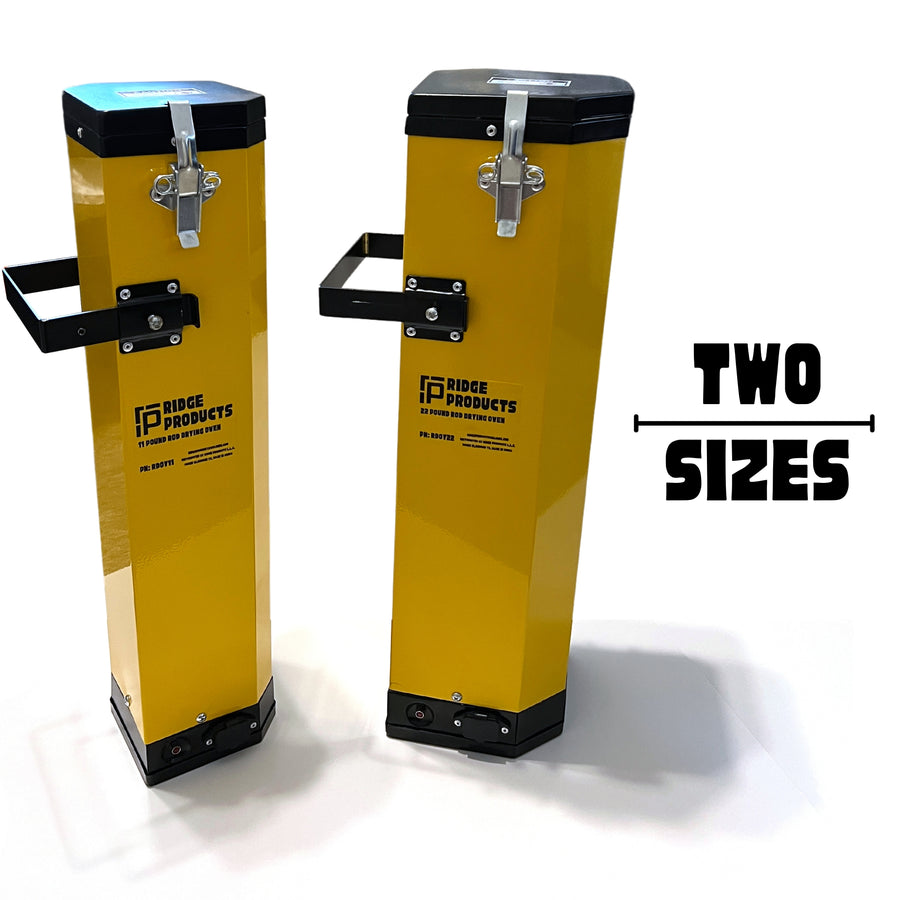
Consider a rod oven's capacity and portability. Most welders only need a small unit they can carry between job sites. Some rod ovens are available in 11 lb and 22 lb sizes. This means that both the occasional welder and someone with a full time welding business can find a suitable size. Both units are capable of holding rods that are up to 18 inches long, and have a locking lid that keeps the contents secure while on the move.
Temperature Control and Build Quality
A good rod oven will maintain the set temperature without any additional input from the user. There are some rod ovens that use standard 110V and 360W to maintain a steady 300°F, which is the ideal temperature for most low hydrogen and stainless steel rods. This level of temperature control is what differentiates a rod oven from a converted household oven, and is a must for anyone that has to follow welding codes.
Frequently Asked Questions
What Temperature Should a Flux Oven Be Set To?
Most holding ovens for stick welding rods are set to 250-300°F. Larger industrial rebake ovens are set to much higher temperatures for reconditioning rods or flux that has absorbed moisture. Always check the manufacturer’s recommended temperature for the consumables being stored.
How Long Can Rods Sit Out Before They Need Rebaking?
Low hydrogen rods like 7018 are generally good for around four hours outside of a sealed bag or oven. A humid environment shortens that window.
Can I Use a Kitchen Oven as a Rod Oven?
A kitchen oven can dry rods in a pinch, but it cannot hold a steady low temperature the way a dedicated rod oven can. A kitchen oven is unsuitable for most code-driven welding jobs.
Do I Need a Rod Oven for Mild Steel Welding?
Most general fabrication work using cellulosic rods like 6010 or 6011 does not need a rod oven. Low-hydrogen rods and code-driven structural or pipeline jobs generally do.
What Is the Difference Between a Holding Oven and a Rebake Oven?
A holding oven maintains the temperature of welding rods that have been dried. A rebake oven runs at a much higher temperature to remove moisture from welding rods or flux that have been exposed to the air.
Does a Rod Oven Use a Lot of Electricity?
Most rod ovens only use as much electricity as is needed to maintain the set temperature. Some rod ovens use 360W on a standard 110V circuit to maintain 300°F. This low level of power consumption costs far less than reworking a weld that has failed due to poor rod storage.
What Happens If I Weld With a Wet Rod?
Moisture in the flux of a welding rod will be broken down into hydrogen atoms when an arc is struck. The hydrogen can then find its way into the weld metal and cause porosity or delayed cracking. Cracking due to hydrogen in the weld can occur hours or even days after the weld has been made.
Can I Store Different Rod Types In the Same Oven?
Most classifications of welding rods have slightly different temperature requirements, which means that they should not be stored in the same oven. Using separate shelves or containers for different classifications of welding rods is the best way to prevent cross contamination.
Conclusion
Moisture in welding flux is the root cause of many failed welds, and a flux oven is the best way to prevent that from happening. For most welders, that means a rod oven rather than the large industrial grade equipment used for submerged arc welding.
Keeping rods within the correct storage temperature range, monitoring the time they spend outside of a flux oven, and following the manufacturer’s rebake guidelines covers most of the requirements for code compliant welding. If the current rod storage solution is a converted fridge or a kitchen oven, a dedicated flux oven is a worthwhile investment that won’t break the bank.