


There are few experiences that compare to the awe of witnessing a total solar eclipse. Unfortunately, we often forget the importance of taking proper safety precautions or rely too heavily on generic solar eclipse glasses.
But there may be an uncommon but practical solution that most people haven't considered: welding helmets. They're generally used for an entirely different purpose, but the way welding helmets are structured and designed makes them a great option for safely viewing a solar eclipse under certain conditions.
We'll break down exactly when it's safe to wear a welding helmet, when it isn't, and how to choose the right safety equipment without risking your eyesight.
Can You Watch a Solar Eclipse With a Welding Helmet
The short answer is yes, you can wear a welder's helmet to watch a solar eclipse. However, it must have the correct lens shade.
Experts typically recommend a minimum shade rating of 12, with shade 14 being the safest and most recommended option for direct solar eclipse viewing. Anything below that threshold will not block enough of the sun's intense visible light and radiation.
Many standard welding helmets used in workshops are shades 9-11, making them unsafe options for watching an eclipse. That's why you must consider all options available, rather than just settling for the first helmet you see.
Why Viewing an Eclipse with the Naked Eye is Dangerous
Many believe that watching a solar eclipse isn't as harmful as staring directly at the sun. However, even with the moon blocking it, the sun still emits powerful ultraviolet and infrared radiation. The danger is deceptive because the sun appears much dimmer than usual.
This can lead to solar retinopathy, a condition that damages your retina. Symptoms include blurred vision, blind spots, or, in extreme cases, permanent vision loss. This damage can occur without immediate pain, so you don't realize until it's too late.

Understanding Welding Helmet Solutions
If you're looking for an innovative solution, it's welding helmets. Understanding how to choose the most appropriate option involves knowing a filter's shade number and its suitability.
This is how the recommended rating scale works:
- Shade 1-4: Very light, not suitable for viewing an eclipse
- Shade 5-8: Light, not suitable for looking at an eclipse
- Shade 9-11: Good protection, most common shades for welding tasks, but not suitable for eclipses
- Shade 12-14: High-intensity protection, safe for eclipse viewing
A shade 14 lens blocks most visible light and radiation, making it the safest welding option for viewing a solar eclipse.
Welding Helmet vs Eclipse Glasses: Which is Better?
While welding masks and helmets can work, they're usually not the first choice. Certified eclipse glasses, which are very different from regular sunglasses, are designed for solar observation and must meet the ISO 12312-2 safety standard.
The key differences are:
| Welding Helmets | Eclipse Glasses |
| Designed for welding | Specifically designed for solar viewing |
| Require shade 10-14 lens | Pre-certified |
| Full facial protection | Only eye coverage |
| Durability | Often single-use |
| Common in workshops | Widely available before an eclipse |
If you already own a pair of solar eclipse glasses, it's likely that you would choose to use those for your next eclipse viewing. But if you're already into welding, looking to take it up, or just want a new option for solar observation, you should consider a welding helmet.
Common Mistakes to Avoid
Using a welding helmet incorrectly can be just as dangerous as not using any protection during a solar eclipse. Here are some common mistakes to avoid for a safe, comfortable experience.
Using the Wrong Shade
As we've already established, most welding helmets are simply not dark enough to provide adequate eye protection during a solar eclipse. You must verify the lens rating before attempting use; if it's rated below 12, it's not suitable.
Assuming All Helmets Are the Same
The welding helmet market is so vast that it's almost impossible to find one that doesn't fit your individual needs. Auto-darkening options, for instance, can be very useful for various welding tasks but may not reach the recommended darkness for solar viewing. Consider your options and choose the one that suits your comfort and activities.
Using Damaged Lenses
Damaged lenses aren't recommended for welding, and they definitely aren't for looking directly at the sun either! Scratches, cracks, or worn filters can allow bright light through, so assume any damage is bad and replace the lenses.
Looking Too Long
It's not recommended to stare directly at an eclipse without looking away, even if you're wearing specialized eclipse glasses. As for welding helmets, a shade 14 lens should offer complete protection, but you still shouldn't be looking too long without a break.

What Welding Helmets Are Designed For
Welding helmets are purpose-built safety tools designed to protect your eyes and face from the hazards of welding. Things like intense arc light, sparks, molten metal, UV radiation, and flying debris all create dangers that the helmet protects your face, head, and eyes from.
They're essential in industries like fabrication and manufacturing, automotive repair, construction, and metalworking, but are also commonly used by welders for at-home tasks. These helmets are slowly becoming more mainstream, as evidenced by their new use at solar eclipse events.
Benefits of Different Welding Lens Types
Understanding different lens types helps explain why some helmets can double as eclipse viewers, while others might not be so suitable. Many of the most widely available lenses are excellent for use during a solar eclipse.
Fixed Shade Lenses
These are set to one shade level so you can be sure they're dark enough to handle an eclipse. They're also some of the most reliable and consistent lenses, and are easy to fit into most welding helmets.
Auto Darkening Lenses
This type of lens automatically adjusts when welding begins, so they're extremely convenient for work environments. When it comes to watching a solar eclipse, they're not always suitable if they don't go dark enough, but some do support shades 12 to 14 in passive mode.
Gold Welding Lenses
Gold welding lenses reflect heat and infrared radiation, both of which welding and solar eclipses have in abundance. They improve visibility and comfort and can sometimes be used in high-shade configurations, making them a good choice.
Choosing the Right Welding Helmet
If you're considering a welding helmet for dual use in the workshop and for watching those exciting solar eclipses, you should ensure it meets all of these criteria:
- Shade 14 capability
- High optical clarity
- Durable, scratch-resistant lens
- Reliable certification standards
Don't use it if:
- You're unsure of the shade rating
- The lens is damaged
- It's a standard, lightweight workshop helmet
Where to Get Quality Welding Helmets
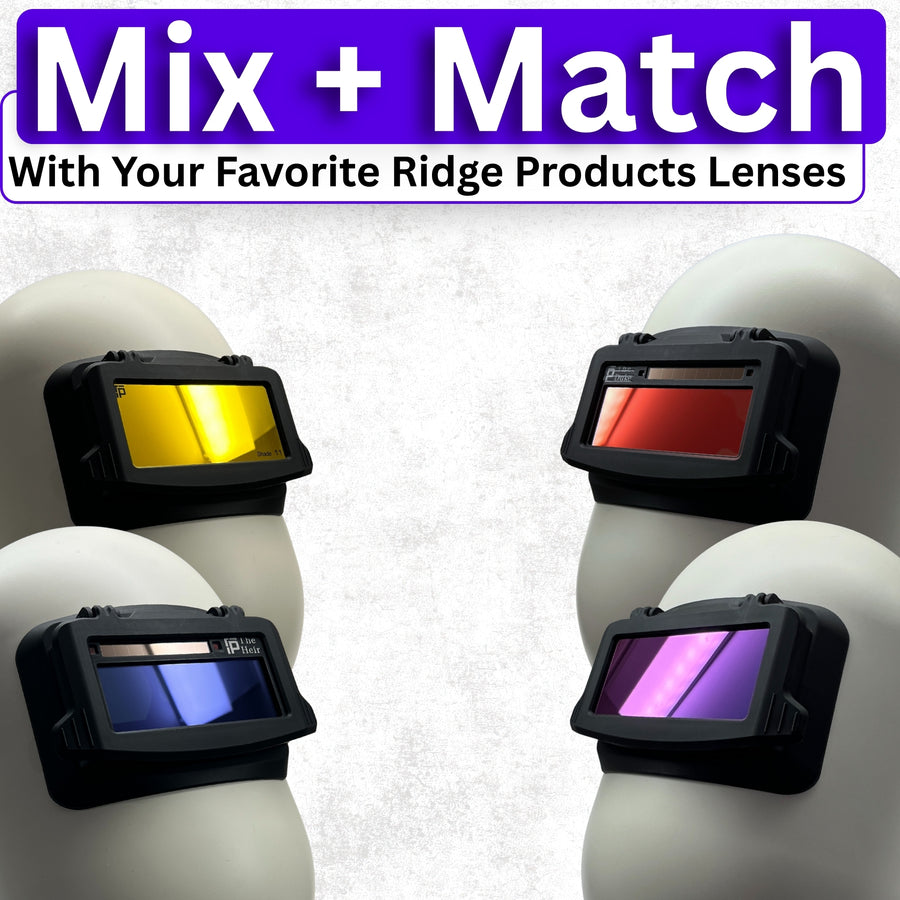
For professional-grade equipment, you should consult an expert welding helmet manufacturer. Ridge Products Welding helmets are designed to accommodate any lens thickness, which is a practical advantage as many other helmets struggle to accommodate thicker welding lenses. Each model is also crafted from durable fiberglass, striking the ideal balance between lightweight comfort and fire resistance.
These welding helmets are ideal for both workshop use and recreational solar observation (with the correct lenses). The benefits are simple, practical, and focused on doing the basics exceptionally well. They don't support cheater lenses, but these lenses aren't recommended for watching a solar eclipse due to their magnifying properties, so there's no limitation there.

Frequently Asked Questions
Can Any Welding Helmet Be Used to Watch a Solar Eclipse?
No, not all welding helmets are safe for eclipse viewing. Only helmets with a lens shade rating of 12 or higher, preferably shade 14, provide adequate protection. Lower-rated lenses do not block enough harmful light and can damage your eyes.
Is a Welding Helmet Safer Than Solar Eclipse Glasses?
Both can be safe if they meet proper standards. Certified eclipse glasses are specifically designed for solar viewing and must meet ISO 12312-2 standards. Welding helmets can be equally effective, but only if they have the correct shade rating and are in good condition.
What Happens if You Use the Wrong Lens Shade?
Using a lens below shade 12 exposes your eyes to dangerous ultraviolet and infrared radiation. This can lead to solar retinopathy, which may cause blurred vision, blind spots, or permanent eye damage without immediate pain.
Are Auto-Darkening Welding Helmets Safe for Viewing an Eclipse?
Not always. Some auto-darkening helmets do not reach the necessary shade level when not actively welding. If the helmet does not support a passive shade of 12–14, it should not be used for eclipse viewing.
How Long Can You Safely Look At a Solar Eclipse With a Welding Helmet?
Even with a shade 14 lens, it’s best to avoid prolonged, continuous viewing. Take breaks and look away periodically to reduce eye strain and ensure maximum safety.
Conclusion
Solar eclipse glasses remain an accessible and viable option, but for those with an interest in welding, helmets serve an interesting and effective dual purpose. There's no combination quite as unique as everyday utility and once-in-a-lifetime celestial viewing.